
Isn't it fun when you suddenly find an old photo album because you get a hold of many memories from the past? You may recognize some people and not recognize some. If you are looking for an answer to how to identify old photos or unknown people in photos, you are at the right place. Once you get to know the information related to photos or the people in photos, you can share it with your cousins or other connected people. Saving those pictures yourself sounds good too.
In this article, I'll walk you through all the steps and tools of AI Photo Restorer that can help you identify the old photos and people in old photos.

Identify and Restore Old Photos with VanceAI Photo Restorer
Before you can identify the people and places in an old photo, the photo itself often needs help. Scratches, fading, and sepia drift obscure clothing details, location backgrounds, and small clues like signage or jewelry — the exact details you'd use to date and identify the image. The VanceAI Photo Restorer cleans these up in a single browser pass so the identification work that follows actually has something to work with.
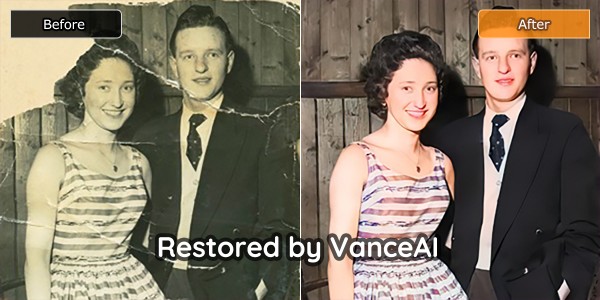
Use it like this:
Open VanceAI Photo Restorer in your browser and click Upload Image.
Drag in your scanned photo. Pick Restore for scratches and fading; add a Colorize pass for black-and-white photos where you need clothing or background color clues for dating.
Wait a few seconds for processing, then download the restored copy. Output matches your input resolution.
The colorize step often helps with identification because period-plausible colors restore visual cues — a navy uniform vs. a brown one, a red dress vs. a green one — that the model infers from era, clothing style, and lighting. For severely damaged scans, stack a Denoise pass before Restore for a cleaner result.
4 Tips on Identifying Old Photos
Identifying old photos can be fun but tricky. The four tips below cover the repeatable techniques that genealogists, photo historians, and family researchers all use.
1. Check the Photo Type and Material
The physical photo itself often reveals the era. Daguerreotypes and tintypes are pre-1880s; cabinet cards run from the 1860s to 1900s; postcard-format photos appeared after 1907; Polaroids point to the 1960s onward; early Kodak color prints with rounded corners are typically 1950s–60s. The paper itself, the corner shape, and the back of the print — embossed studio name, lab marks, paper brand — all narrow the date range.
For digital scans, look for visible artifacts of the original medium: silver mirroring on the surface, yellow-orange edges from chemical aging, or the textured paper of mid-century commercial prints. These cues survive the scan and give you a starting point.
2. Check People, Location, and Fashion
Fashion changes faster than almost any other visible clue. Hairstyles, hat shapes, lapel widths, hemline lengths, and necktie styles each point to a specific 5–10 year window. A 1960s beehive or 1970s wide collar dates the photo before the people in it can be identified.
Locations also help. The car model in the background, the storefront branding (a Woolworths sign, a particular gas-station logo), the architectural style of the building, and even the angle of the street lamp post can each narrow a date. For outdoor shots, compare the location against present-day Google Street View — many buildings still exist and can be matched against the photo.
3. Check Dates and Inscriptions
Always flip the photo over (or check the back of the scan). Handwritten dates, studio stamps, lab dates, and "Made in [place]" marks are common. Studio names and addresses are searchable — a stamped studio name often reveals the city and approximate era of the photo.
If the date is on the front (a calendar in the background, a banner with a year, a birthday cake with candles), zoom in on the scan after restoration to see what the original print might have hidden. AI restoration often reveals text and numerals that the original faded print obscured.
4. Use a Family Tree and Identified Relatives
Once you have an approximate date, build the family tree forward and backward from any people you can already identify. If a relative would have been seven years old in 1957 and the photo shows a child of about that age in 1950s clothing, you have a likely match.
For group photos, identify the easy faces first — grandparents, parents — and then work outward. Share the restored photo with cousins, aunts, and uncles via family group chat. Multiple family members triangulating from different memories is usually faster than any individual researcher working alone.
Websites for Identifying Old Photos
When the four tips above aren't enough, these websites help with photo identification online.
1. Google Photos
Google Photos has a strong facial recognition feature that automatically groups photos of the same person across your library. Upload your scanned old photos to Google Photos, wait while the AI scans for faces, and the app will suggest groupings. You then label one face manually and Google propagates the name across all matching photos.
The feature isn't perfect on heavily aged photos — facial features in faded scans are harder to match — but works well after AI restoration. Share the grouped photos in family chats to confirm or correct the automatic labels.
2. DeadFred
DeadFred is a long-running community-built genealogical photo archive. You can browse by surname, browse photos that have been identified, or upload a mystery photo for community identification. The site collects photos from the late 1800s through mid-1900s and is most useful for US family-history research.
For deeper research, you can also search by photographer name, studio town, or estimated date. The community is small but active, and identified photos often link to genealogical sources for further research.
3. Ancestors Lost and Found
Ancestors Lost and Found is another free site providing genealogical information and photo identification crowdsourcing. Upload a picture or enter names, surnames, and related metadata; the site returns possible matches from its identified collection. Most useful when paired with traditional ancestry research (census records, immigration ship manifests).
4. FamilySearch (Memories)
The FamilySearch Memories section is a free, large genealogical archive maintained by the Church of Jesus Christ of Latter-day Saints. The Memories tool lets you upload, tag, and share old family photos within a private family tree, then use the site's record-matching to connect photos to identified individuals from census, marriage, and immigration records.
5. Reddit r/OldPhotos and Genealogy Subreddits
For heavily uncertain photos, post a restored scan to r/OldPhotos, r/Genealogy, or r/HistoryPorn (read each subreddit's rules first). Genealogy-focused communities are often surprisingly skilled at dating clothing and hairstyles within a 5-year window from a single photo. Pair the post with any context you do have: where the photo was found, names of any relatives in adjacent photos, the approximate location.
Frequently Asked Questions
What's the fastest way to date an unidentified old photo?
Check the back first for studio stamps, lab dates, or handwritten notes. If the back is blank, identify the format (cabinet card, postcard, Polaroid) and use the clothing and hairstyles of the people in the photo. These three checks usually narrow a date to within a 10-year window.
Can AI help identify people in old photos?
Yes, partially. Google Photos and similar facial recognition tools cluster faces across photos but require at least one already-labeled face to propagate the identification. AI restoration also helps by sharpening features the original scan blurred, which makes manual identification by family members easier.
How do I find the photographer of an old photo?
Check the back of the photo for an embossed or stamped studio name and address. Studio names from the late 1800s and early 1900s are searchable in historical directories (Library of Congress, local historical societies). The studio location alone often dates the photo and confirms the family's location at that time.
How do I share an old photo for family identification?
Restore the photo with VanceAI Photo Restorer first so the people are clearly visible, then share via family group chat or a private FamilySearch family tree. For broader help, post to a genealogy subreddit or DeadFred with surname and approximate date as context.
Can clothing style alone date a photo accurately?
Often within a 5–10 year window. Women's hairstyles change every few years and are the strongest single clue. Men's collar width, hat style, and necktie shape narrow the date further. Combine clothing analysis with photo format (cabinet card vs. Polaroid) for the highest accuracy.
What's the difference between identifying and dating an old photo?
Dating the photo is figuring out approximately when it was taken (the era). Identifying the people is figuring out who is in it. Dating is the easier first step and usually uses physical and visual clues; identification benefits from facial recognition, family records, and crowdsourced communities.
Should I restore an old photo before or after identifying it?
Restore photos first. Restoration sharpens clothing details, brings out background signage, and clarifies facial features — all of which support better identification. Black-and-white originals benefit doubly from the Restore + Colorize stacked workflow because period-plausible colors add visual cues that black-and-white scans hide.
Are the historical photo identification websites free?
All sites listed above are free at the entry level. DeadFred, FamilySearch, Ancestors Lost and Found, and Reddit communities are entirely free. Google Photos is free with a Google account. Some genealogy services (Ancestry.com, MyHeritage) charge for advanced features.
What if there are no living relatives to help identify the photo?
Lean on community sites (DeadFred, FamilySearch, Reddit) and historical archives. Local historical societies are also worth contacting if the photo has a recognizable location — many have archived photo collections from the same neighborhood and may have an identified twin or matching family.
How do I store identified old photos so the identification doesn't get lost again?
After identifying, write the names, date, and location directly into the file metadata using a photo organizer (Apple Photos, Google Photos, Lightroom). Also keep a separate plain-text caption file alongside each photo. Use TIFF or PNG for preservation copies and JPG for sharing.
Conclusion
Identifying old photos is part detective work, part family research, and part AI-assisted restoration. Use the four tips — photo type, fashion and location, dates and inscriptions, family tree — as your baseline. When those run out, the websites above expand the search. And always restore the photo first: a clean, sharp restored scan turns identification from guesswork into a tractable puzzle.