Recreating childhood photos has become a viral trend — capturing the same pose, lighting, and outfit decades later for a side-by-side comparison. This guide walks through creative ways to recreate your childhood photos, the AI tools that restore the originals first (so you have a clean reference), and tips for matching lighting, expression, and composition with VanceAI's AI Photo Restorer.
How to Recreate Childhood Photos with VanceAI Photo Restorer
What Does "Recreating Childhood Photos" Mean?
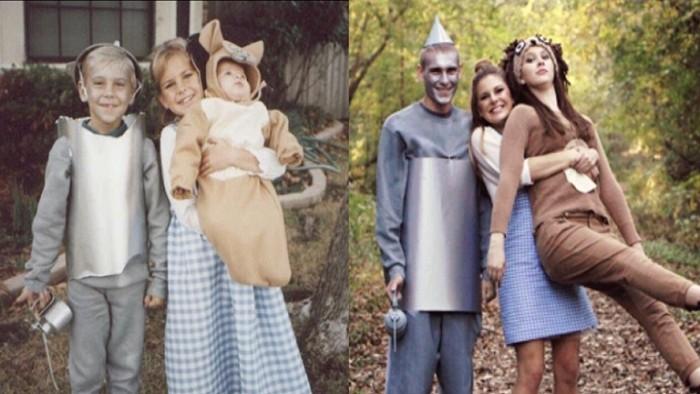
Childhood is the most fun and memorable age of one's life — no worries about college admissions or paying bills, and the joy of those years shows in every snapshot from that era. Recreating a childhood photo is the side-by-side game of matching the original pose, outfit, props, and lighting decades later, and then sharing the comparison as a single viral image. The trick is starting from a clean reference: faded, scratched, or low-resolution childhood photos make it harder to copy the small details (the bow on a dress, the exact tilt of a head). That's where a one-pass AI photo restoration step pays off before you start staging the recreation.
How to Use VanceAI Photo Restorer to Prepare Your Childhood Reference
Like VanceAI's other tools, the old photo restoration workflow is powered by AI and machine learning that delivers a single benefit you actually feel in the recreation game: a sharp, scratch-free reference shot you can hold up next to your reenactment. You don't need any editing expertise — upload, choose your settings, and download.
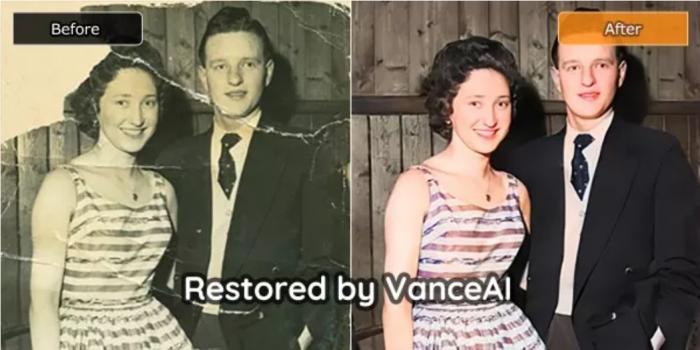
Step 1: Open the Photo Restorer in your browser.
Open the VanceAI Photo Restorer page and click the upload area. The browser-based studio accepts JPG and PNG up to 5,000 pixels on the long edge.
Step 2: Upload your old childhood photo.
Once the workspace opens, pick "Restore" — this is the mode that removes scratches, creases, tears, and faded tone from a scanned childhood photo. You can stack "Colorize" on top if your original is black and white, but for recreation purposes, restoring detail comes first.
Step 3: Preview, then download the restored photo.
The workspace shows a before-and-after preview so you can confirm the model recovered details rather than smoothing them away. Once you're happy, download the restored copy — that's your matching reference for the recreation shoot.
8 Tips to Recreate Childhood Photos
| Tip | Creativity | Achievability | Fun Factor | Social Reach |
|---|---|---|---|---|
| Find the right original photo | ★★☆☆☆ | ★★★★★ | ★★★☆☆ | ★★☆☆☆ |
| Gather the same people in the photo | ★★★★☆ | ★★★★☆ | ★★★☆☆ | ★★★★☆ |
| Match the background closely | ★★★☆☆ | ★★★☆☆ | ★★☆☆☆ | ★★★☆☆ |
| Get the outfits right | ★★★☆☆ | ★★★☆☆ | ★★★☆☆ | ★★★☆☆ |
| Match the pose precisely | ★★★☆☆ | ★★★☆☆ | ★★★☆☆ | ★★★☆☆ |
| Copy the facial expression | ★★★☆☆ | ★★★☆☆ | ★★★☆☆ | ★★★☆☆ |
| Pick a baby photo for max impact | ★★★★☆ | ★★★★☆ | ★★★★☆ | ★★★☆☆ |
| Nail the cake / props for birthday shots | ★★★☆☆ | ★★★☆☆ | ★★★☆☆ | ★★★☆☆ |
Adults recreating childhood photos has become a hot trend across TikTok and Instagram — you'll see dozens of side-by-side comparisons every day. The good news: it's not as hard as it looks. Below are the eight repeatable rules that consistently produce shareable results.
1. Search for the Right Original Photo
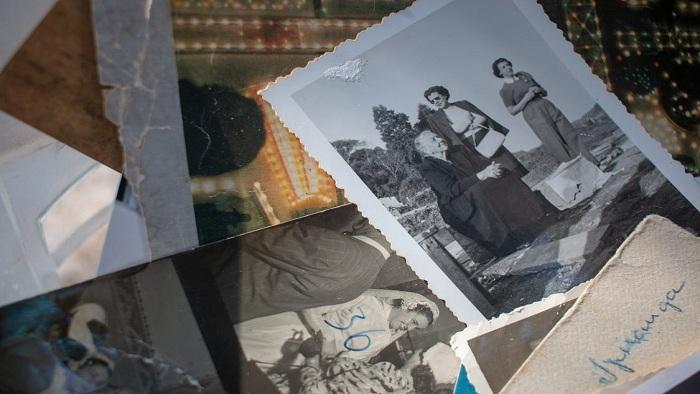
The recreation only works if the original photo has clear, identifiable details. Skim through old albums, scanned folders, and shared family Drives to pick a photo where you can clearly read the outfit, background, and pose. Birthday parties, third-grade portraits, and family wedding photos are the strongest candidates because they have memorable visual anchors. Avoid heavily damaged or altered scans — if the original is too faded, restore it first.
2. Gather the Same People in the Photo
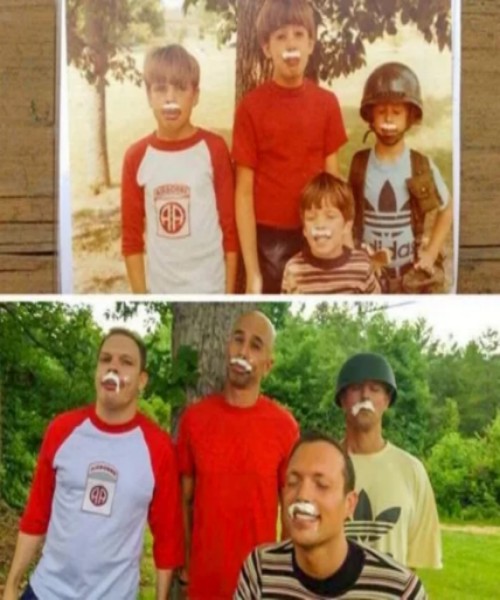
Was the photo of you with friends or siblings? Recreating it alone tells only half the story. Get everyone in the original shot involved — they may resist at first, but once the camera comes out, the nostalgia takes over. Group recreations also generate stronger social engagement because each viewer recognizes someone in the frame.
3. Match the Background Closely
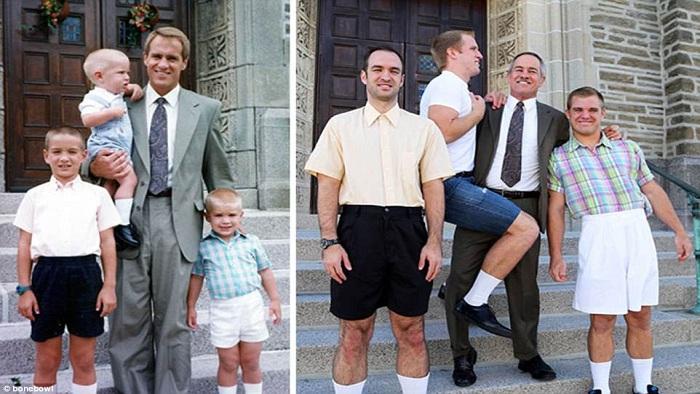
Background is the silent half of every recreation. If you can return to the original location — the same staircase, the same kitchen table, the same chair — do it. If the location no longer exists, use a neutral solid-color background so all attention stays on the subjects and outfits. Avoid busy modern backgrounds that pull focus from the matching elements.
4. Get the Outfits Right
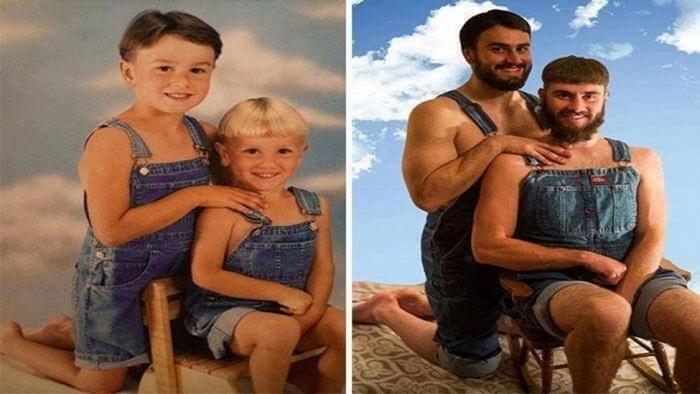
Outfits are the most recognizable matching element. You won't fit into your original Mickey Mouse dress, so the goal is the closest possible adult-sized version. Hit secondhand shops, Etsy, or rental services for vintage children's-style outfits scaled up for adults. Match colors first, patterns second, exact cut third — viewers register the silhouette before the fabric.
5. Strike the Same Pose
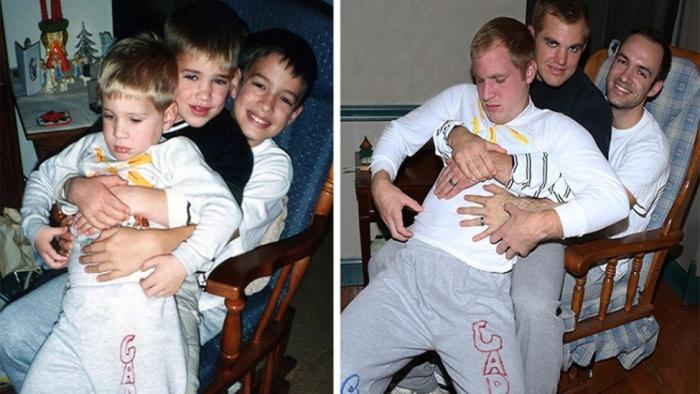
We were all a bit goofy and cringey as kids — embrace it. Open the original photo on your phone right next to the camera and use it as a live reference. Get hand positions, leg angles, and head tilt right. Small pose mismatches are what give away a recreation; getting them right is what makes it go viral.
6. Copy the Facial Expression
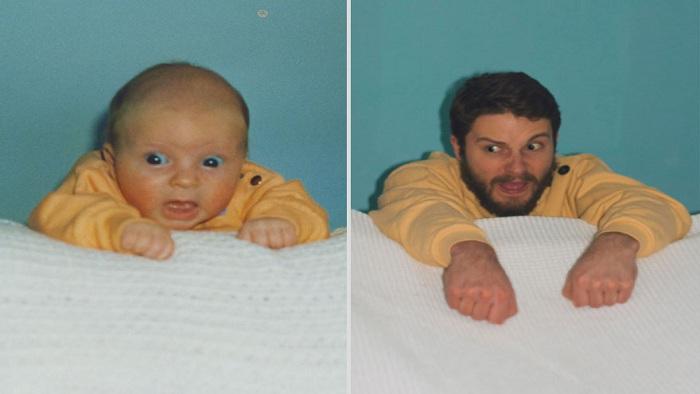
Facial expressions carry the personality of the original. If you were rolling your eyes, sticking your tongue out, or grinning ear to ear — match it. Don't overthink what people watching will think. The goofier the original expression, the funnier the recreation; the more serious, the more striking the comparison.
7. Pick a Baby Photo for Maximum Impact
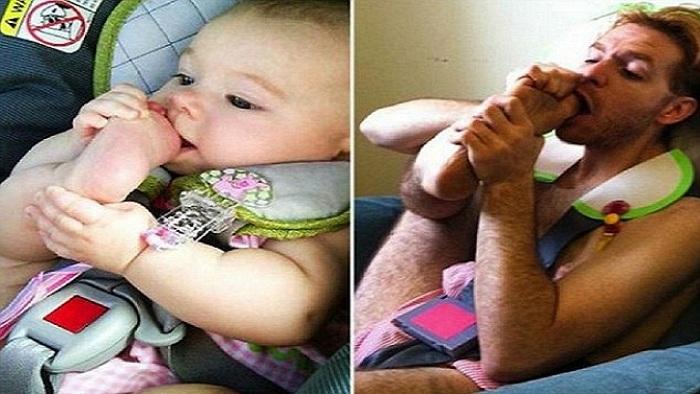
"Old is gold." Baby photos are the funniest category to recreate because the contrast between adult body and baby pose is automatic comedy. A photo where you're being bottle-fed by mom, sitting in a high chair, or playing in a bathtub becomes hilarious when reenacted as an adult. Don't let a little dignity get in the way — the willingness to commit to the absurd is what makes the recreation go viral.
8. Nail the Cake and Props for Birthday Photos
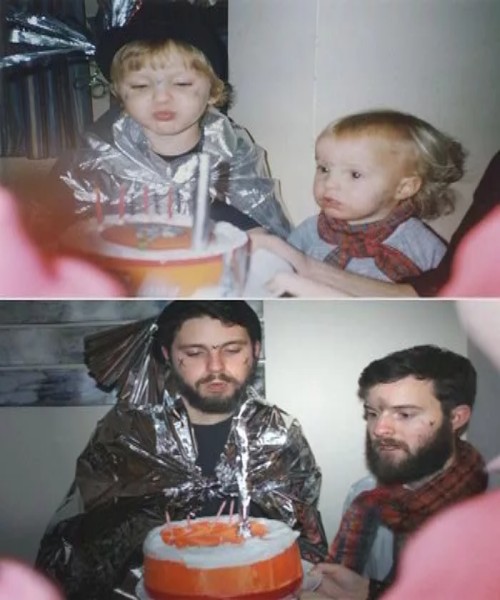
For birthday recreations, the cake is the centerpiece. Visit the same bakery (if it still exists) or order a custom cake from a local baker matching the original's design, color, and candle count. Match the balloon colors, the same number of candles, and any decorations visible in the corners of the original frame. Viewers' eyes go straight to the cake — if it matches, the rest of the recreation feels effortless.
FAQs
Why is recreating childhood photos so popular on TikTok and Instagram?
Side-by-side childhood recreations work natively on short-video and image-grid platforms — the comparison delivers the joke in a single frame, no narration required. TikTok's autoplay and Instagram's carousel format both reward "before vs. after" content with strong watch time and saves. The nostalgia trigger also drives shares from family members, which expands reach beyond a typical post.
What's the best AI tool to restore a childhood photo before recreating it?
For most childhood photos, VanceAI Photo Restorer handles scratches, fading, and minor tears in one pass. Black-and-white photos can also be colorized to match a modern recreation.
How do I find the right adult-sized outfit to match a childhood photo?
Start with thrift stores and Etsy for the closest fabric and color match. For unusual children's outfits (custom dresses, themed costumes), reach out to your original tailor or order a one-off from a local seamstress. Most viewers register the silhouette and color before the exact fabric, so prioritize those.
Can I recreate a childhood photo from a low-resolution or scanned photo?
Yes — but restore and upscale the scan first. Low-resolution scans hide details that matter for matching: the exact tilt of a hand, the small graphic on a t-shirt, the cake's frosting color. AI restoration + upscaling reveals those details so you can recreate them accurately.
Should I match the original photo exactly or add modern elements?
Both approaches work. Exact matches go viral because of the precision. Adding intentional modern elements (a smartphone, a pet that wasn't there, a different sibling who was too young at the time) makes a more comedic recreation. Pick whichever style suits your personality and audience.
How do I shoot a recreation that looks like the original camera quality?
Match the camera roughly: an instant film camera for late-2000s recreations, a digital point-and-shoot for early-2000s, a film SLR for 1980s and 1990s photos. If you only have a modern phone camera, apply a film-grain filter and slight color shift in post to match the era's color palette. Keep aspect ratio identical to the original.
What if the location or backdrop no longer exists?
Use a neutral solid-color backdrop in your home — white, cream, or the dominant color of the original background. The viewer's eye locks onto the subjects and outfits, so a clean neutral backdrop is almost always better than a wrong specific location.
Can I add new family members or pets to the recreation?
Yes, especially for birthday and group photos. New family members make the recreation more meaningful — they're meeting the original people across time. Pets that arrived after the original photo can also be added; they're a natural fit and audiences love the bonus character.
How do I share the recreation for maximum reach?
Post the original and the recreation as a two-image carousel on Instagram, or as a side-by-side single video on TikTok. Tag the original people in both images so they can re-share. Use vertical orientation for TikTok and square or 4:5 for Instagram. The caption should reference the year of the original — that single detail dramatically increases shares.
How long does the whole recreation project take?
Most recreations take a single afternoon of staging plus 10–15 minutes of pre-shoot AI restoration on the original. The largest time sink is sourcing the outfit, which can take a week or two if you're hunting vintage pieces. Budget two weekends end-to-end for a polished recreation.
Conclusion
Recreating childhood photos is one of the most rewarding short-format trends on the internet right now. Pay attention to clothes, background, pose, props, and expression — those five elements drive 90 percent of how viral the result becomes. Start with a clean restored reference, copy the small details, and don't be afraid to commit to the goofy poses that made the original photo memorable in the first place.