Video blurriness is the loss of sharpness and detail, typically caused by camera shake, poor focus, low light or resolution, and aggressive compression. Clear footage matters for virtually all use cases — social content, surveillance, family memories, and more. In this guide we walk through two complementary unblurring methods you can use in 2026: CapCut, a popular and beginner-friendly editor with sharpening and stabilization tools, and VanceAI Video Upscaler, a browser-based AI video upscaler with two proprietary AI models built specifically for deblurring and detail restoration.
Why Are My Videos Blurry?
Video blurriness is the loss of sharpness and detail. It usually comes from two places:
capture issues — shaky hands, missed focus, or low light
technical limits — low resolution and heavy compression
For capture issues, camera shake is a major culprit — it introduces motion blur that hides edges and fine detail. For technical limits, low resolution often limited by the sensor yields soft, low-detail frames. Compression can also smear textures and add visible artifacts.
In professional projects, blurry clips lower production value and weaken audience trust. In security and surveillance, unclear footage makes people or events harder to identify. The good news: there are excellent tools to make blurry video clearer — CapCut handles light sharpening and stabilization, while AI-powered web apps like VanceAI Video Upscaler reconstruct missing detail from millions of training frames.
📺 Prefer to follow along visually? In about 90 seconds watch the Unblur A Video CapCut demo below:
What is CapCut?
Platforms: Online, Windows, Mac, iOS, and Android
CapCut is a popular, cross-platform video editor known for its approachable interface and capable toolset — friendly for beginners yet efficient for pros. For fixing blur, it can:
Stabilization reduces camera shake and motion blur
Adjust brightness and contrast to make the video easier to see
Upscale to a higher resolution when possible to improve clarity
Use light sharpening or filters to add detail, but don't overdo it
Method 1: How to Unblur a Video with CapCut
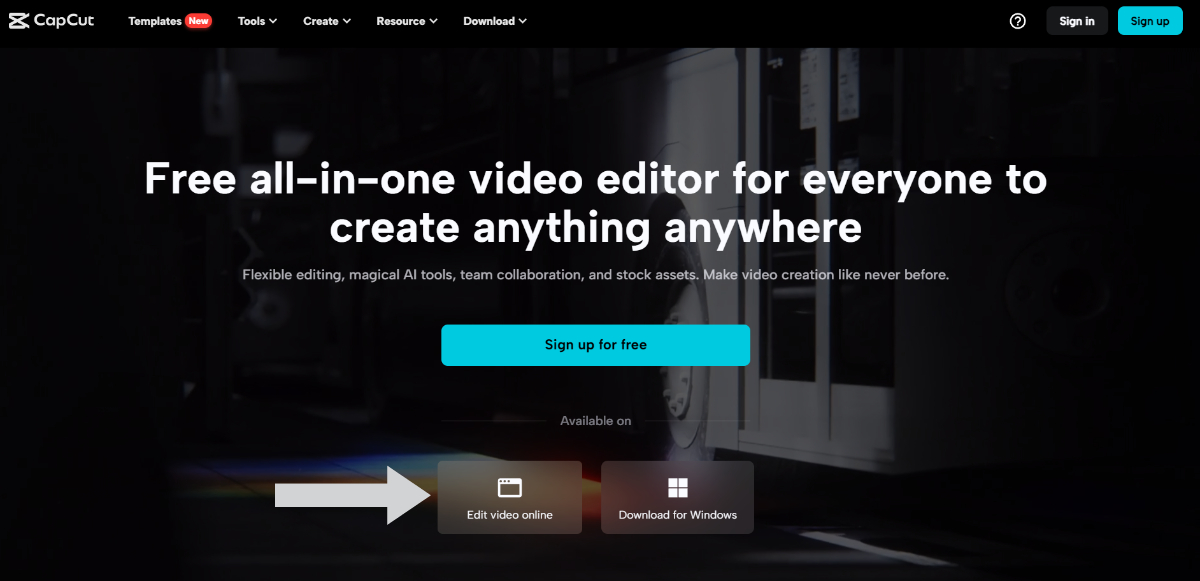
Step 1: Use the link given to CapCut to gain access to it online. There, you can either download the setup file or go to the PlayStore for mobile.
Click on the button indicated by the arrow to use CapCut online and create an account.
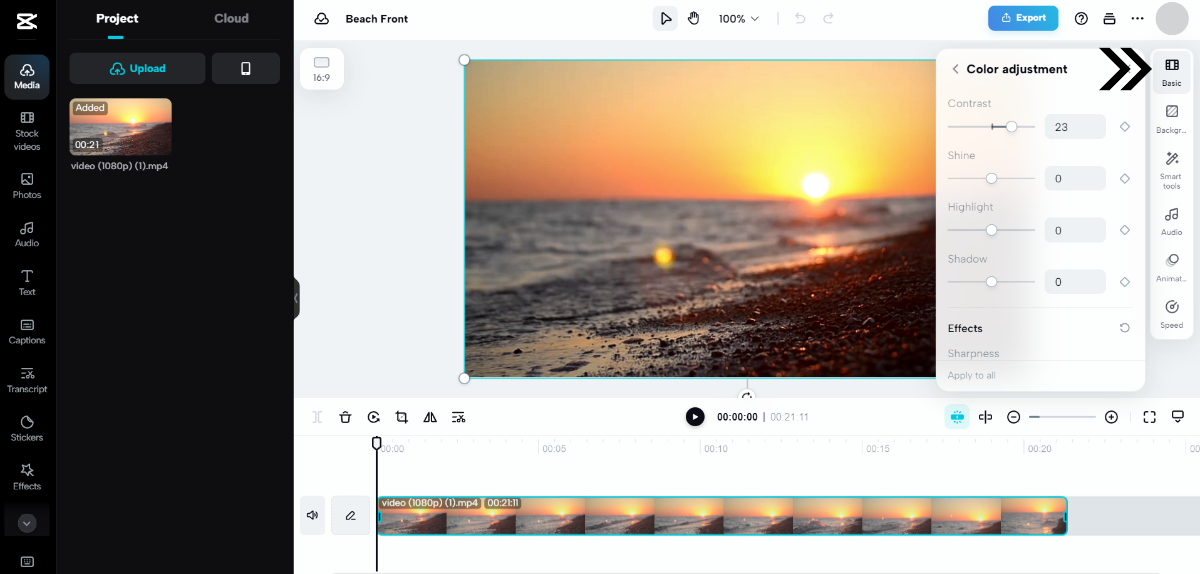
Step 2: After you create an account, you will be redirected to the editor mode. Upload a video to start editing. For basic unblurring, click on Basic, scroll down to Lightness and Effects. In the former, adjust the contrast; in the latter, increase the sharpness. You can also use the Curves feature.
Tip: In the process of editing, make timely adjustments and preview as you go — overdoing sharpness can introduce halos.
Step 3: If you want to save your video, click on the Export option. Choose your preferences and download the video.
Method 2: How to Unblur a Video with VanceAI Video Upscaler
CapCut handles surface-level blur — sharpness adjustments and stabilization. For deep deblurring where AI reconstructs missing detail from millions of training frames, VanceAI Video Upscaler is the purpose-built choice. It runs entirely in your browser — no install, no GPU dependency, no version updates to manage. Any modern browser on Windows, Mac, Linux, or Chromebook works.
The web app gives you two proprietary AI models. Nexa is a universal enhancement model that balances speed and quality for everyday footage — modern phone clips, YouTube videos, and ad drafts. Cineva is cinematic-focused, optimized for SD footage up to 1024×540 with a fixed 4× upscale — ideal for old DVD rips, VHS digitizations, and vintage anime where blur and low resolution co-exist. Trusted by 9.8 million artists and creators globally.
Price: Credits-based. From vanceai.com/pricing: $4.95 for 100 credits (+100 bonus, limited time), $7.95 for 200, $12.95 for 500 (Most popular), $17.95 for 1000. 7-day money-back guarantee; free trial credits with no credit card.
How to Unblur a Video with VanceAI
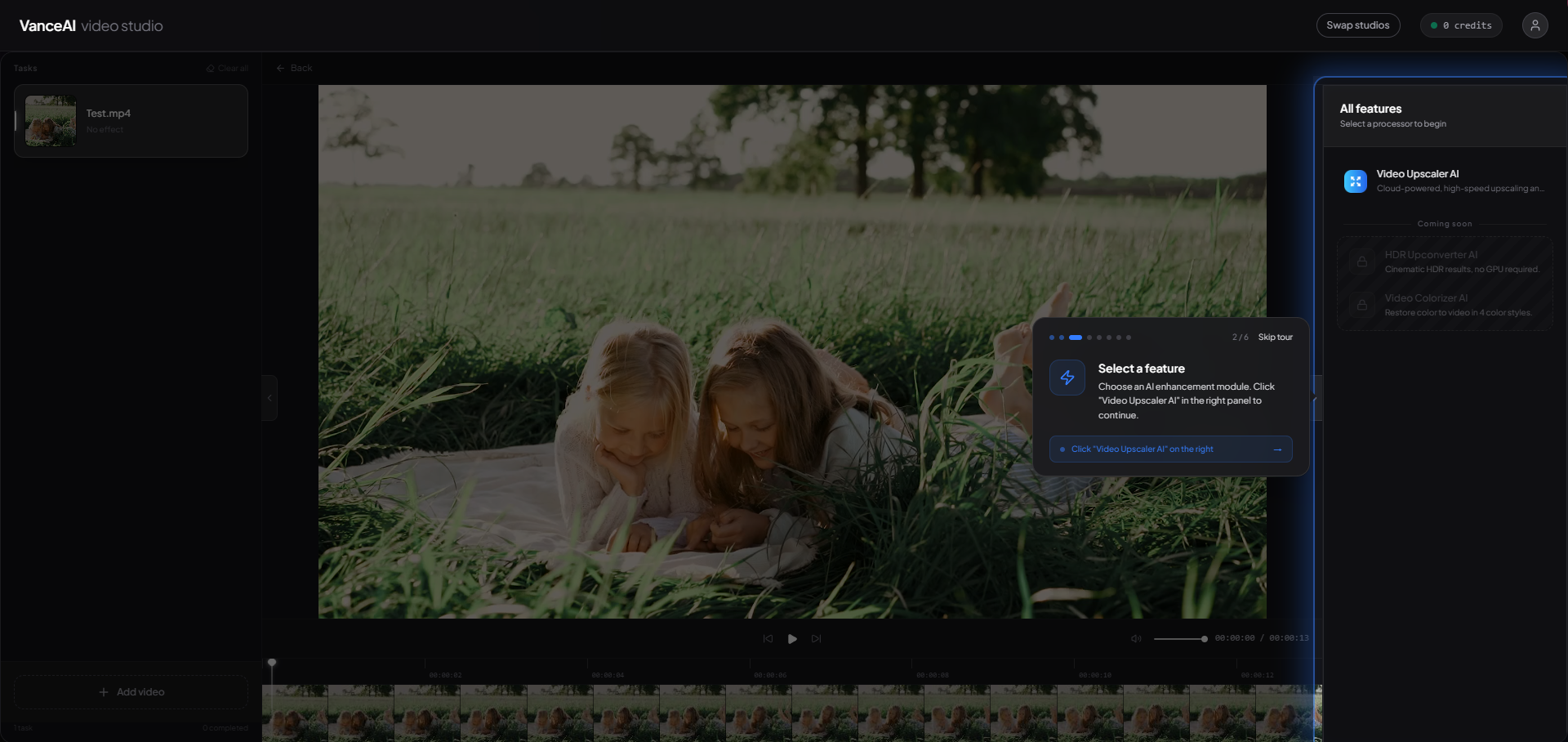
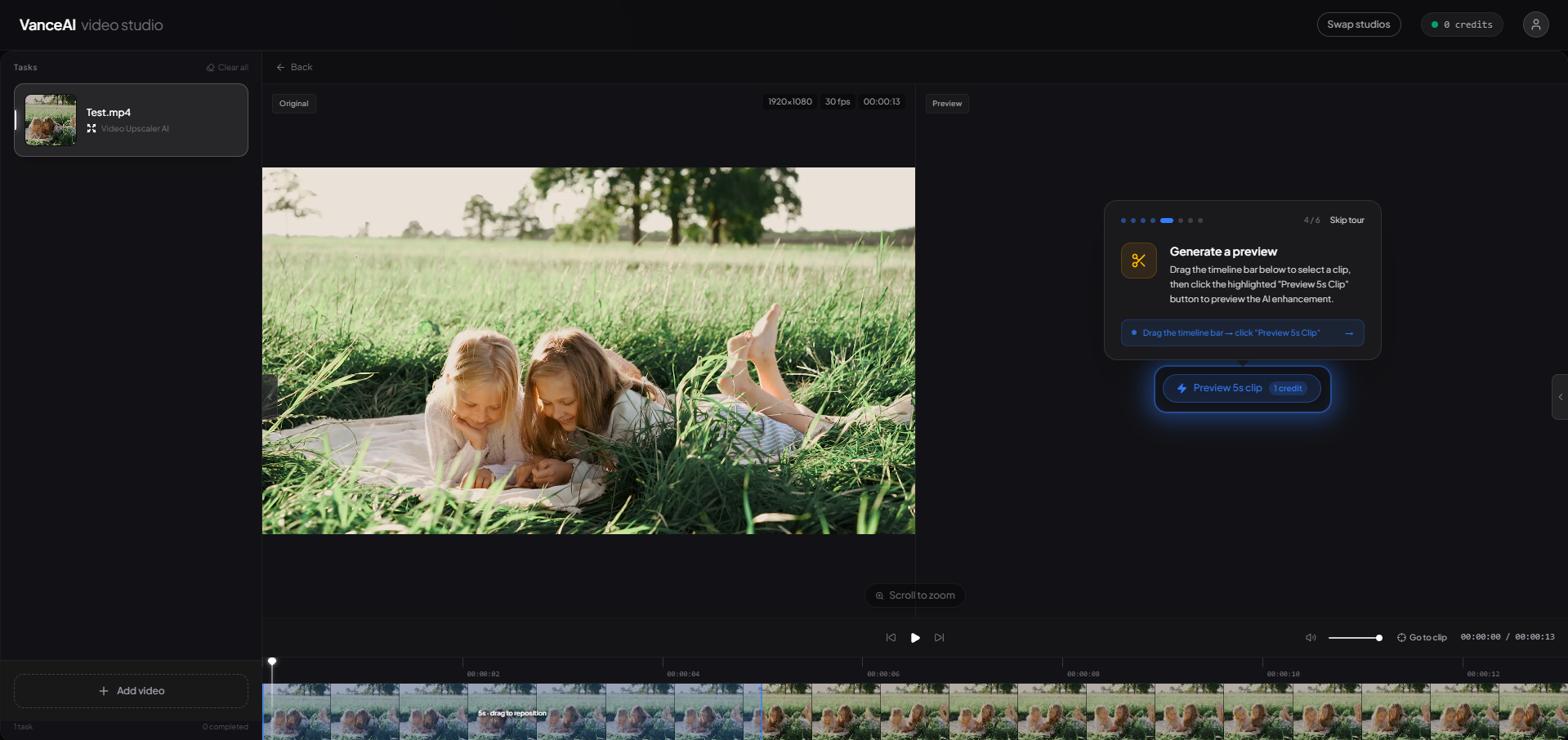
Step 1: Open vanceai.com/video-upscaler in your browser, sign in, and click Add video (or drag your blurry MP4/MOV onto the canvas).
Step 2: In the right sidebar, click Video Upscale AI, then pick the model and output resolution. For modern phone or YouTube blur, choose Nexa + 1080p or 4K. For SD-source blur (old DVD or VHS), choose Cineva (fixed 4× upscale).
Step 3: Click Generate a preview to verify the deblurring quality on a 4-second sample — drag the white timeline bar to choose the most representative segment (a face close-up or action shot). If you like the result, click Start processing for the full clip; otherwise tweak the model or resolution and re-preview.
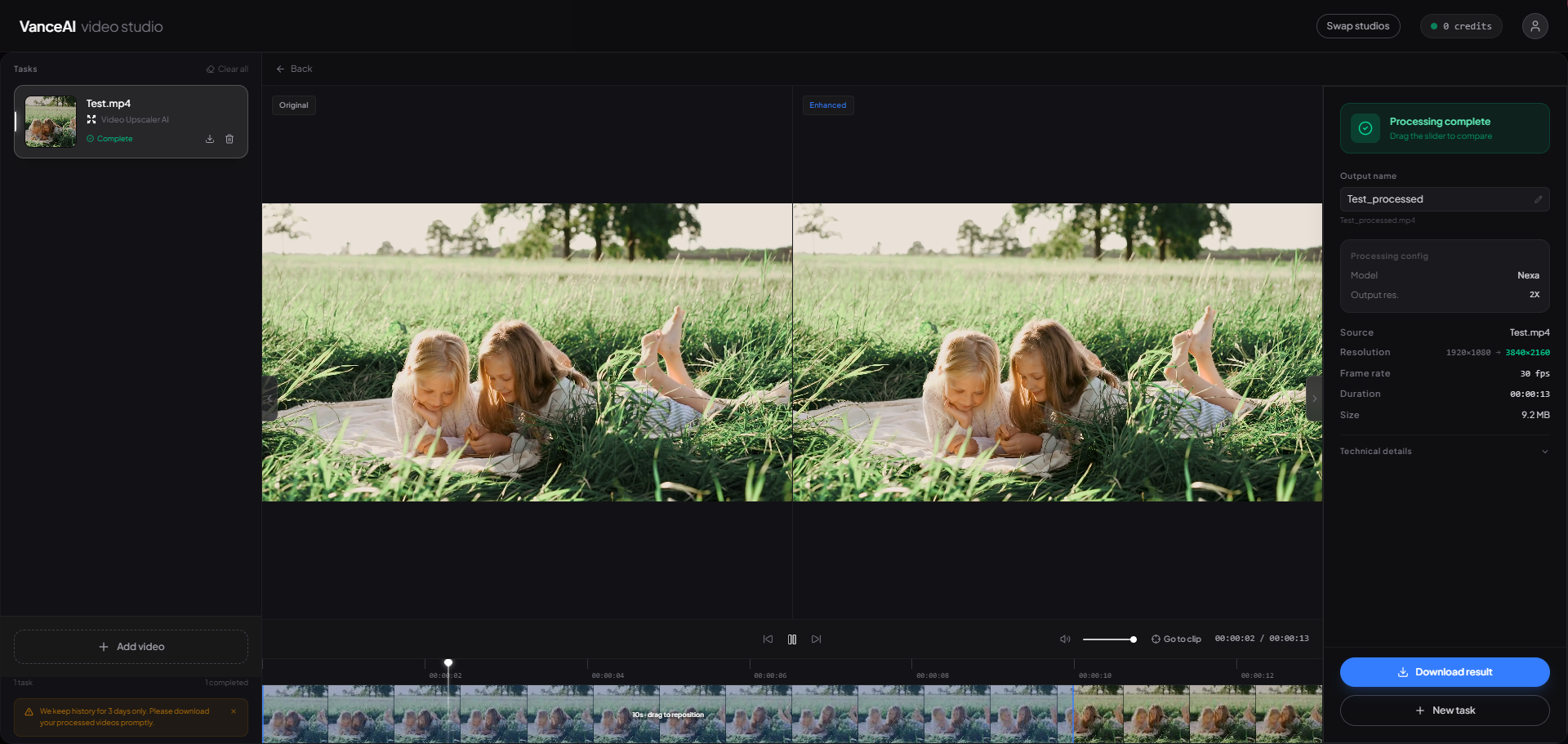
When the task shows Processing complete, click Download result to grab the MP4. Files stay in your dashboard for three days. For a side-by-side guide on multiple unblurring methods including iPhone built-ins, see how to make a blurry video clear.
Tips for Effective Video Optimizing
In addition to the steps above, you can also keep a few key points in mind to prevent blur.
Use a tripod or gimbal to keep the camera steady. Less shake means less blur and clearer detail.
Keep ISO low in bright light to avoid noise. In low light, raise ISO only as much as needed to keep the image bright.
Use a faster shutter to freeze motion and keep detail. A slower shutter will blur movement.
Hold the camera firmly and move smoothly. If you often film while moving, choose a device with built-in stabilization or use a stabilizer.
FAQs
Why is my CapCut video blurry?
Blur usually comes from the footage or your settings — low resolution, missed focus, low light, or camera shake. And in CapCut, the preview can look softer than the final export. Besides that, exporting at a low resolution/bitrate, or extra compression from TikTok, Instagram, or YouTube, can also reduce clarity.
Are there any free tools to unblur videos?
Yes. VanceAI Video Upscaler gives new web app users free trial credits with no credit card required, and output MP4s carry no watermark. CapCut itself has a free tier (with limits). Clipchamp and Veed.IO offer free online editors with sharpening tools — they are easier to use than full-blown desktop software.
What's the best AI tool to unblur a video in 2026?
For browser-based convenience and the lowest install friction, VanceAI Video Upscaler is our top pick. The web app gives you Nexa for everyday footage and Cineva for cinematic SD restoration, plus a 4-second preview to verify quality before spending credits. CapCut is excellent for quick stabilization and sharpening on social media clips.
What's the difference between CapCut and VanceAI for deblurring?
CapCut adjusts sharpness, brightness, and contrast — it nudges existing detail to look crisper without inventing new detail. VanceAI Video Upscaler uses AI models (Nexa and Cineva) trained on millions of frames to reconstruct missing detail by predicting what the underlying pixels should look like — so it can recover detail that CapCut's sharpening cannot.
Can I unblur a video without losing quality?
Yes. Modern AI upscalers like VanceAI Video Upscaler preserve and reinforce detail rather than stretching pixels. The output looks shot, not enhanced. Pair AI deblurring with light manual sharpening in CapCut for the most polished result.
How much does VanceAI Video Upscaler's web app cost?
Credits-based. From vanceai.com/pricing: $4.95 for 100 credits (with a +100 bonus during the limited-time 2× promo), $7.95 for 200, $12.95 for 500 credits (Most popular), and $17.95 for 1000. PAYG credits stay valid for a year. All plans include a 7-day money-back guarantee.
Can AI fix motion blur from a shaky camera?
Yes — motion blur is one of the textbook cases for AI deblurring. Both VanceAI's Nexa and Cineva models are trained on millions of frames with motion blur and reconstruct sharp edges. For severe shake at capture time, combine AI deblurring with software stabilization in CapCut (Edit > Stabilization).
What video formats does VanceAI Video Upscaler accept?
VanceAI Video Upscaler (web app) currently accepts MP4 and MOV up to 10GB and delivers output as MP4. For AVI, MKV, or WMV input, run a quick free conversion to MP4 first.
Can I unblur old VHS or DVD footage?
Yes — this is exactly where AI deblurring shines. SD footage from VHS rips and old DVDs typically caps at 480p or 540p with both blur and low resolution. VanceAI's Cineva model applies a fixed 4× upscale on SD input up to 1024×540, restoring blurry vintage anime, 2000s cartoons, or childhood home tapes to near-HD clarity.
How long does it take to unblur a video?
Processing time depends on the source length, resolution, and tool. Cloud-based services like VanceAI process video on optimized server-side GPUs — short clips take just minutes. CapCut's sharpening adjustments are instant. Desktop AI tools can take 30 minutes to several hours per minute of footage depending on your GPU.
Conclusion
High-quality video boosts engagement and looks more professional. When viewers see crisp detail and steady motion, they watch longer and share more. CapCut makes light deblurring quick — stabilize shaky shots, add light sharpening, balance exposure — with no steep learning curve. For deeper AI-driven deblurring that reconstructs missing detail, VanceAI Video Upscaler's Nexa and Cineva models deliver browser-based reconstruction in minutes. Use both methods together for the best result: VanceAI to recover detail, CapCut to polish the final cut.
Was this article helpful?
Frank Edward
Senior content writer
Frank provides expert information on AI tools that are applied to E-commerce, design, games, music and videos.