
In this Pixelcut reviews, we'll take an in-depth look at Pixelcut, a platform for photo editing and enhancement. With the Pixelcut AI photo editor, users can effortlessly create anything from social media posts to intricate designs. We'll dive into Pixelcut's features and help you determine if it's the right tool for your needs.

From Confusion to Creation — Pixelcut's First Impression
The very first time I tried Pixelcut, I was desperate. My side hustle shop was about to launch a new set of vintage camera pins, but every product photo had a cluttered, mismatched background. Photoshop? I'd need an hour and 20 YouTube tutorials. Instead, I dragged my product shots into Pixelcut, not expecting magic. Within seconds, the backgrounds were clean, crisp, and professional — as if I'd paid a designer.
There's something deeply satisfying about watching the AI swiftly "erase" a messy table or distracting wall. A little progress bar sweeps across the screen, and — voilà — my store page suddenly looks legit. For anyone who doubts whether an app like Pixelcut can really deliver on those "one-click" promises, I was right there with you. It's pretty rare, as a non-techie, to feel in control and creative at the same time.
💡 Overwhelmed by messy product photos and editing tools that seem built for wizards? You're not alone — I've been that frustrated seller too.
Two weeks later, an eBay listing needed fixing in a hurry. I snapped a pic with my phone, ran it through Pixelcut on mobile, and the new, background-free image boosted my sale almost overnight. That moment confirmed for me that the AI editor space had truly leveled up — but as I'll cover later, Pixelcut isn't the only player you should put on your shortlist.
What's Inside Pixelcut? Features That Matter
Pixelcut AI — Does It Live Up to the Hype?
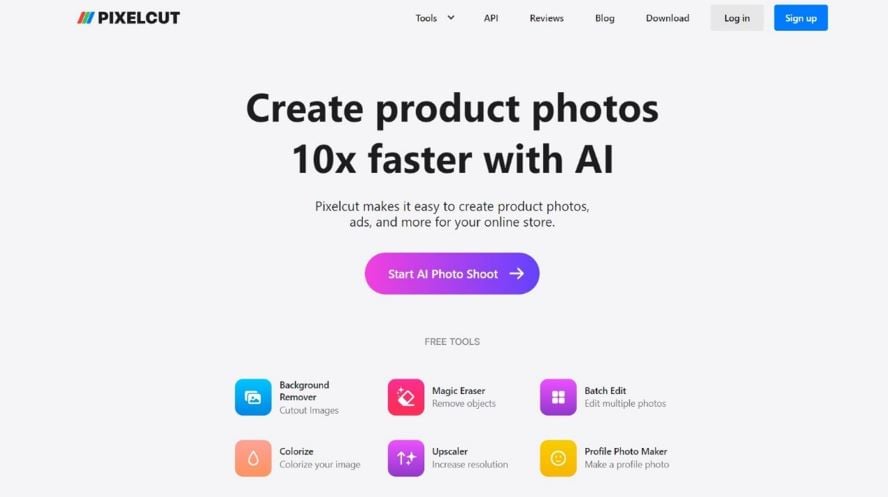
Pixelcut's AI feels genuinely smart — maybe even a little too clever if you're used to fighting with old-school tools. On my first real test, I uploaded photos with complex backgrounds, messy shadows, and nearly-blending product edges. The AI sliced away the unwanted noise in seconds, rarely missing a beat. Compared to manual lasso tools or "magic wand" frustration, Pixelcut's approach is a revelation.
It's not just for products, either — portraits, logos, and even pets get clean treatment. And for creators on tight budgets or timelines, this is a serious game-changer. "Pixelcut AI" isn't just a buzzword — it's the reason the tool stands out among countless editing apps and browser add-ons. The trade-off comes when you push the model on tricky inputs (transparent glass, hair on a busy background, jewelry on a reflective surface) — accuracy slips a notch and you'll want to manually refine edges.
Batch Edit, Templates & Remove BG in Action
Let's talk speed: bulk editing is where Pixelcut flexes. I've processed a dozen photos — remove bg, crop to platform-perfect sizes, and toss them into ready-made templates — before my coffee cools. The templates are stylish, easy to tweak, and designed with real-world platforms in mind, whether you're running an Etsy shop or hyping your band online.
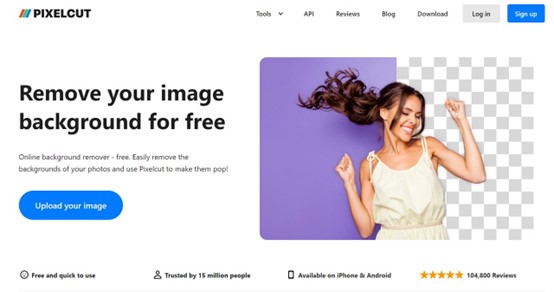
Remove bg, undeniably, is Pixelcut's star. With single-click removal, you're not just skipping painstaking work — you're bypassing layers, masks, and endless tweak cycles. While Pixelcut Pro unlocks batch exports and ultra-high res, even the free plan covers daily creative needs for most hustlers and hobbyists. For users who want to compare workflows, see the deep dive in our background removal tools comparison.
Hands-On Experience: Pixelcut in Daily Workflow
Real User Scenarios: E-commerce & Creators
Imagine prepping dozens of product shots for an upcoming shop launch — Pixelcut turns that dreaded chore into a fast, even enjoyable process. For my last e-commerce update, I batch-uploaded all product images, ran "remove bg" in one go, and slid them seamlessly into branded templates. Not once did I have to fumble with fiddly tools or start over when the background bled into my subject.
Content creators will appreciate how easy it is to resize for different social platforms (Instagram, Etsy, Pinterest), and the template options cut brainstorming time in half. I've saved myself hours, which means more time for actual creativity — or, let's be real, more coffee.
Just last week, I used Pixelcut's mobile app at a cafe to craft matching story covers for a campaign. Ten images, clean backgrounds, quick pastel overlays. The whole process — from upload to shareable download — was done before my latte cooled.
Free vs Pro: Is Pixelcut Pro Worth It?
The free tier of Pixelcut impressed me more than most "trial" plans — no watermark surprises, rapid edits, and most essential features unlocked. For light users, especially indie makers and occasional sellers, the complimentary version should be plenty.
Pixelcut Pro sweetens the deal with unlimited exports, batch processing for serious volume, higher-resolution downloads, and priority support. If you're juggling a full catalog, collaborating with teammates, or running fast-paced campaigns, Pro is a justifiable upgrade — and the $9.99/month is less than a lunch in NYC.
Do you absolutely need Pro? Not unless your workflow depends on heavy automation or premium outputs. I used free Pixelcut for weeks before feeling any FOMO. That's rare for image editor subscriptions.
Mobile, Web & Cross-Device Convenience
One of Pixelcut's main appeals is its seamless sync: you can jump between phone, tablet, and browser without missing a beat. I've bounced edits from my phone while on the subway to Chrome at my desk, and all the projects sit in sync, waiting for the next tweak.
User reviews echo these sentiments — many love how simple it is to keep tinkering on the go, and store projects for access later. Whether you're a digital nomad, a student hustling prints, or a parent batch-prepping family albums, that frictionless experience is a true win.
Behind the Scenes: Is Pixelcut Safe Enough?
Privacy, Data Security & User Control
"Is Pixelcut safe?" — I had the same question before uploading dozens of client shots. Pixelcut encrypts your files, adheres to GDPR and CCPA, and keeps user interfaces blissfully free of shady ads or odd sharing defaults. Privacy settings and information about data handling are easy to find — no endless searching in obscure legalese.
Speaking as a privacy hawk, I've never seen my projects leak out or appear in unexpected places. That's more than I can say for some big-name design platforms.
What Happens to My Uploaded Photos?
Pixelcut stores uploads securely, and images are only used for editing — not for training AI or hidden marketing. You're free to delete your files anytime, and nothing is used publicly without explicit permission. If you're like me — nervous about creative work landing in third-party galleries — Pixelcut's transparency will set your mind at ease.
For additional peace of mind, always check the privacy FAQ or drop support a quick note with concerns; their response was detailed and reassuring when I tested it.
Pixelcut Reviews: What Do Real Users Say?
Review Highlights & Critiques
Reading through recent Pixelcut reviews on the App Store and Reddit, a few patterns pop up. Users rave about how easy it is to get started — no design jargon, no steep learning curve. The AI-powered "remove bg" earns heaps of praise for accuracy, even on tricky images with hair or overlapping objects. Many first-timers say Pixelcut saved their business or social campaigns in a pinch.
Downsides? Some mention slow exports for large batches and wish more premium templates were unlocked in the free plan. A few longtime users also note that single-image limits on the free tier can feel tight once your shop scales past a few dozen SKUs.
Community & Support Experiences
Pixelcut's user community isn't massive like some legacy photo tools, but it's refreshingly active. The Beginner's Group on Facebook and speedy email support get frequent shoutouts; you're never stuck for long. I've always gotten a friendly, human reply (not a maddening bot) within 24 hours, even for "dumb" newbie questions.
Contrary to what you might expect from a newer app, the support is personal and detailed — something I now realize I miss from the big "corporate" software brands. Plus, users often share creative hacks and workflow tips that keep things fun and dynamic.
VanceAI vs Pixelcut: When to Pick Each One
After spending months using both Pixelcut and the VanceAI Background Remover, I started to see them as complementary rather than competing. Here's how I'd choose between them for everyday work.
| Criteria | VanceAI ⭐ | Pixelcut |
|---|---|---|
| Primary focus | All-in-one AI image studio (BG removal, upscaling, denoising, restoring, sharpening) | Editor + templates + remove BG |
| Background remover quality | Edge-precise even on hair, glass, jewelry | Strong on clean subjects, occasional refinement on hair |
| Upscaling beyond original size | Yes — 2x / 4x / 8x / 16x via Image Upscaler | Limited to base resolution upgrades |
| Templates and layout design | Not a focus — pair with Canva | Strong — built-in templates for Etsy, Instagram, Shopify |
| Pricing model | Credits-based — Starter $9.95 / 100 credits per month, PAYG with 7-day money-back | Flat subscription — Pixelcut Pro $9.99 / month |
| Best for | Cleaning, sharpening, restoring, and upscaling product / portrait photos | Building social-ready posts and bulk template work |
My personal rule of thumb: I run product photos through VanceAI first to remove the background and sharpen edges, then push the cleaned cutouts into Pixelcut templates for the final social-ready layout. The combination beats either tool used alone. For tighter restoration needs (faded edges, low-resolution archive shots), the old photo restoration is a useful for product photographers.
Frequently Asked Questions
How does Pixelcut's "remove bg" feature work?
Just upload your photo and tap "remove bg" — Pixelcut's AI detects the subject, cuts out the background, and offers instant previews to fine-tune. For tricky edges (hair, glass, jewelry), you can refine the mask manually. The same one-click flow exists for batch processing on the Pro plan.
Is Pixelcut really safe for uploading sensitive images?
Yes. Pixelcut uses encryption in transit, follows GDPR and CCPA, and doesn't share or use your images for AI training without permission. You can also delete files anytime from your account dashboard. For client work, this is the privacy posture you want.
What do you get with Pixelcut Pro?
Pixelcut Pro unlocks unlimited exports, premium templates, batch processing, high-resolution downloads, and priority support — all aimed at creators who deal in volume. At $9.99 per month, it's competitive with similar AI editor subscriptions.
Do I need to be a pro designer to use Pixelcut?
Not at all. The app is built so anyone — from business beginners to hobbyists — can create pro-looking visuals easily. The onboarding tutorial walks you through the first few edits, and the template library does most of the layout work for you.
How does Pixelcut compare to VanceAI?
Pixelcut is a hybrid editor-plus-templates platform, while VanceAI is a focused AI image studio with stronger background removal, upscaling, denoising, and photo restoration models. For pure remove-BG and social templates, Pixelcut is plenty. For polished product photos that need crisp edges and high-resolution output, VanceAI Background Remover is the stronger choice.
Can Pixelcut handle bulk product photo editing for e-commerce?
Yes, especially on the Pro plan. You can upload dozens of product images, batch-remove backgrounds, and apply consistent templates across the entire set. It saves hours of manual masking and template tweaking, particularly for Etsy or Shopify shops.
What's the maximum image resolution Pixelcut supports?
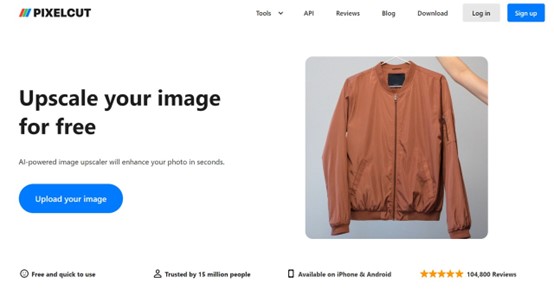
The free plan typically exports at standard web resolutions, while Pro unlocks higher-resolution downloads suitable for print-ready product photography. For images that need to go beyond the original capture resolution, a dedicated upscaler (such as VanceAI Image Upscaler) is the right next step.
Does Pixelcut work offline?
No — Pixelcut requires an internet connection because the AI processing happens in the cloud. The mobile app caches some interface elements offline, but actual edits need a stable connection.
What file formats does Pixelcut export to?
Pixelcut exports PNG (with transparent background after removal), JPG, and PDF for template-based designs. PNG is the recommended format for product photos that will be placed onto other backgrounds.
Is there a free alternative if Pixelcut's templates feel limited?
Yes. For pure background removal without templates, VanceAI offers a free trial of its Background Remover, with paid credits-based plans starting at $9.95 per month for 100 credits. The pricing model differs (credits vs. subscription), so the right pick depends on whether your workflow is steady (subscription) or burst-y (credits).
Should You Try Pixelcut?
- Pixelcut gives creators, shop owners, and social marketers true "pro" editing power — minus the old-school hassle.
- The AI "remove bg" tool is a must-try for anyone dealing with product, portrait, or even pet photos.
- Safety, transparency, and friendly support make Pixelcut easy to recommend, especially for those who value time and peace of mind.
- For users whose workflow extends beyond background removal — upscaling, denoising, restoration — pairing Pixelcut with VanceAI Background Remover unlocks a more complete creative pipeline.
If you want to skip the confusion and jump straight to creative wins, Pixelcut is — quite frankly — one of my favorite editor shortcuts yet.