

The point at which technology has reached post-image processing is amazing. Now the artificial intelligence can help you to do old picture restoration ( black-and-white, sepia, and so on ) in seconds with two or three clicks. You don't have to resort to expensive photo restoration services or learn Photoshop. You can do this with an AI picture restorer very easily. One of the best online solutions to complete photo repair is VanceAI Photo Restorer.
How to Restore an Old Picture with AI Photo Restorer in 2026
Last updated: Jun 11, 2026
What Is VanceAI Photo Restorer?
The VanceAI Photo Restorer is built around a deep-learning model trained specifically on scanned old photographs. It removes scratches, fractures, sepia tint, and small surface marks without manual masking. The processing runs in the cloud, so even high-resolution scans finish in seconds, and the workspace is built for non-experts — no Photoshop knowledge, no layer manipulation, no manual brushwork.
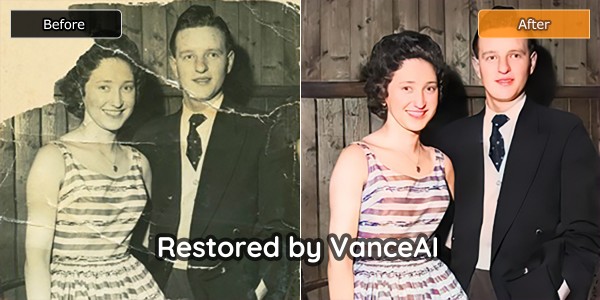
The same workspace also offers a colorize mode for black-and-white originals, an upscaler for small prints that need to be enlarged, and a denoiser for very grainy scans. For this article we focus on the core Restore mode, which is the right starting point for most damaged scans.
Old Picture Restoration Tutorial: 4 Steps
You don't strictly need a tutorial — the VanceAI workspace is designed for first-time use — but the four steps below show what to expect from upload to download. No account is required for the free trial credits.
Step 1: Open VanceAI Photo Restorer in your browser.
Open the photo restoration page and click Upload Image in the studio. The browser-based picture studio accepts JPG, PNG, and TIFF inputs.
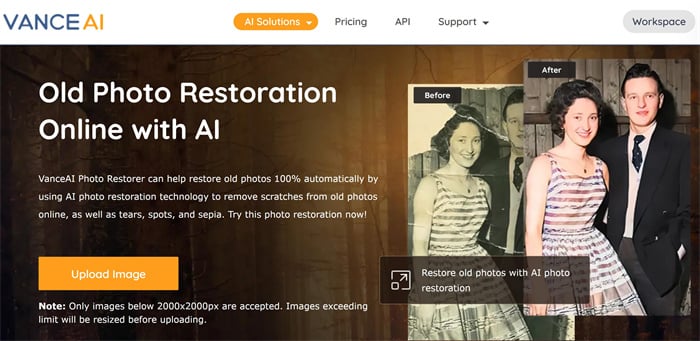
Step 2: Drag, drop, or select your damaged photo.
A workspace panel opens for upload. Drag a scanned photo into the drop zone or click to browse from your computer. The free trial provides credits each month, so you can test the restoration without paying. Paid users can queue up to a batch (one image per pass on the free plan).
Click Continue to load the image into the editor.
Step 3: Click "Start to Process".
Pick the Restore mode for scratches, creases, and fading. Paid users can opt into the advanced AI algorithm for slightly stronger reconstruction on heavily damaged scans, plus optional PSD download for further editing in Photoshop.
Step 4: Preview the side-by-side, then download.
After a few seconds, the result appears in the workspace. Use the "Processed Images" tab to compare the original and the restored version. Output resolution matches your upload — a 600 × 600 px source returns at 600 × 600 px, so plan to upscale separately if you need a print-size enlargement.
Performance of the AI Photo Restorer
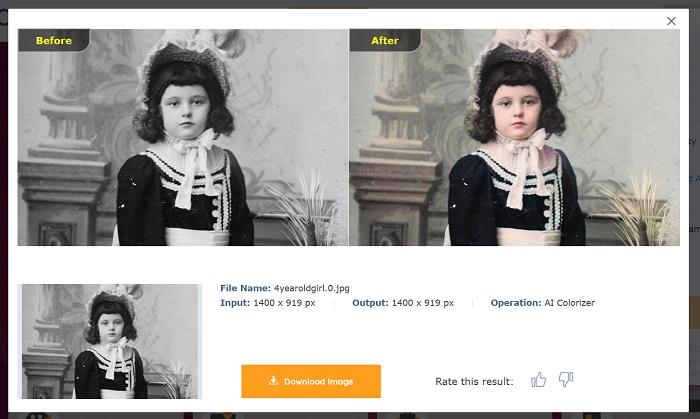
In practice, the restoration handles three damage types convincingly: light scratches on photographic paper, sepia drift on prints stored without protection, and small surface marks left by old albums. Skin tone recovery feels natural rather than plastic — the model preserves the original color register and adds detail in the eye area, hairline, and clothing texture.
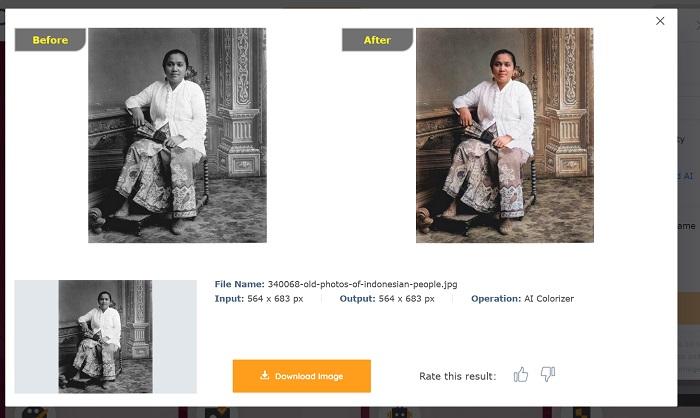
Backgrounds also recover with subtlety. Wallpaper patterns, wooden furniture grain, and outdoor foliage all come back without smoothing into a blurred plate.
Pricing
VanceAI runs on a credits-based model. The Starter plan is $9.95 per month for 100 credits, which covers most casual users running 20–40 restorations a month. Higher-volume users can step up to Standard ($19.95 / 200 credits), Pro ($39.95 / 500 credits), or Premium ($59.95 / 1000 credits). Pay-as-you-go top-ups are also available with a 7-day money-back guarantee (while you've used less than 10% of credits), and unused monthly credits roll over up to 5x the allowance.
The free trial credits are enough to test a few photos before committing. If you're restoring a small family album, the Starter plan is usually enough; for a digitizing business workflow, Standard or Pro is the more cost-effective tier.
Frequently Asked Questions
Can VanceAI restore severely damaged old photos?
Yes, with caveats. Light scratches, creases, fading, sepia drift, and small surface marks are reliably handled in a single pass. Photos with large missing areas (torn corners, missing sections) get partial reconstruction — the model fills small gaps plausibly but cannot invent large absent regions. For severe damage, pair the Restore mode with a separate Denoise pass and minor manual touch-up in Photoshop.
Is VanceAI Photo Restorer free to use?
Yes — the free trial includes monthly credits with no account required for basic restoration. For higher volume or watermark-free outputs across many photos, the Starter plan at $9.95 / 100 credits per month is the entry point.
What file formats does VanceAI Photo Restorer support?
JPG, PNG, and TIFF inputs are supported, up to 5,000 pixels on the long edge. Outputs are delivered in the same format as your upload (PSD download is available on paid plans for users who want to continue editing in Photoshop).
Will the restored photo lose resolution?
No. The restoration preserves the original pixel dimensions — a 600 × 600 input returns at 600 × 600. If you need a larger output for printing, run a separate upscaling pass after restoration.
Can I colorize an old black-and-white photo at the same time?
Yes. The Colorize Photo mode lives in the same workspace and can be run after Restore. The model adds period-plausible color while preserving the restored detail. For very old black-and-white scans, the Restore-then-Colorize order is recommended.
How does VanceAI compare with MyHeritage Photo Enhancer?
Both produce strong restorations, but VanceAI exposes finer control (Restore + Colorize + Upscale + Denoise as independent modes) and a more flexible credits-based pricing model.
Is my uploaded photo private?
Yes. VanceAI processes uploads in the cloud, follows GDPR-aligned data handling, and automatically deletes processed photos within 24 hours. Photos are not used for model training without explicit consent.
How long does each restoration take?
Typical processing finishes in three to ten seconds per image on the web tool, depending on resolution and your network connection. Batch processing on paid plans handles dozens of images in a single run.
What types of photos work best for VanceAI Photo Restorer?
Studio portraits, family photos, group shots, and scanned outdoor scenes all work well. The model performs best on prints scanned at 300 DPI or higher with even lighting. Photocopies of prints (rather than direct scans) lose more original detail and produce less satisfying restorations.
Can I download the restored photo for commercial use?
Yes. VanceAI's commercial license applies to all output on paid plans. Free-tier outputs are intended for personal use; check the terms of service before using a free-tier restoration commercially.
Final Thoughts
VanceAI Photo Restorer is one of the most accessible AI restoration tools available in 2026 — fast, browser-based, and built for users without Photoshop experience. The deep-learning model brings old photos back to life in seconds, and the credits-based pricing scales naturally from a one-off family album to a small digitization business. Pair it with Colorize, Denoise, or Upscale as needed; each mode in the same workspace stacks cleanly on the others, and the side-by-side preview means you can always confirm the result before committing credits.
Was this article helpful?

A passionate content writer. Mostly likes to write about technology and social media related topics. You can see more of my work over on my own blog Amaya Hamilton.


