
Boxes of old prints fade a little more every year, and once they are gone, the moment is gone with them. The good news: you can digitize photos at home in an afternoon, often for free, using nothing more than the phone in your pocket. Once a print is digital it can never fade again, and you can edit it, back it up, and share it with family anywhere in the world.
This guide walks through the methods that actually work in 2026 — free mobile scanning apps, flatbed scanners, and professional services — and shows you how to clean up the results with VanceAI once your photos are scanned.
Table of contents
Why digitize your old photos at all?
A physical print has exactly one copy. A spilled drink, a house move, or simple aging can destroy decades of memories in seconds. A digital file removes that single point of failure: you can store it in three places at once, and a copy in the cloud survives anything that happens to the original.
Digitizing also unlocks everything you cannot do with paper. You can share a scanned wedding photo with relatives in seconds, print a fresh enlargement, or repair cracks and fading with AI old photo restoration. The print stays in the album; the digital copy does the heavy lifting.
What should you know before you start to digitize photos?
Before you start to digitize photos online or otherwise, a little preparation saves hours later.
Most people who want to digitize photos are sitting on albums upon albums of them, and scanning at that scale quickly becomes confusing. Sort the pile first — by date, by event, or by importance, whatever matches how you will look for them later. Pull out duplicates so you are not scanning the same shot three times, and decide which images are worth keeping at all. If some prints are badly damaged before you even begin, note them for the AI restoration step described below, because a clean scan of a cracked photo is still a cracked photo until it is repaired.
A quick organizing pass like this turns a chaotic shoebox into a library you can actually build on. If a printed photo album is part of your workflow, our review of the best photo album software covers tools that keep digital collections tidy after scanning.
How to digitize photos: 4 methods compared
There is no single "best" way to digitize photos — it depends on how many you have, how much they matter, and whether you own a scanner. Here is how the main options stack up before we walk through each one.
| Method | Best for | Cost | Speed |
|---|---|---|---|
| Google PhotoScan | Quick phone scans, glare removal | Free | Fast |
| Photomyne | Batch scanning whole albums | Free + paid extras | Fast |
| Flatbed / dedicated scanner | Maximum detail, archival quality | Hardware cost | Slow |
| Professional service | Large collections, no effort | Per-photo fee | Days to weeks |
Whichever capture method you choose, plan to finish with AI photo restoration so the digital files look their best.
Method 1: Google PhotoScan
Price: Google's PhotoScan mobile app is completely free, with no in-app purchases.
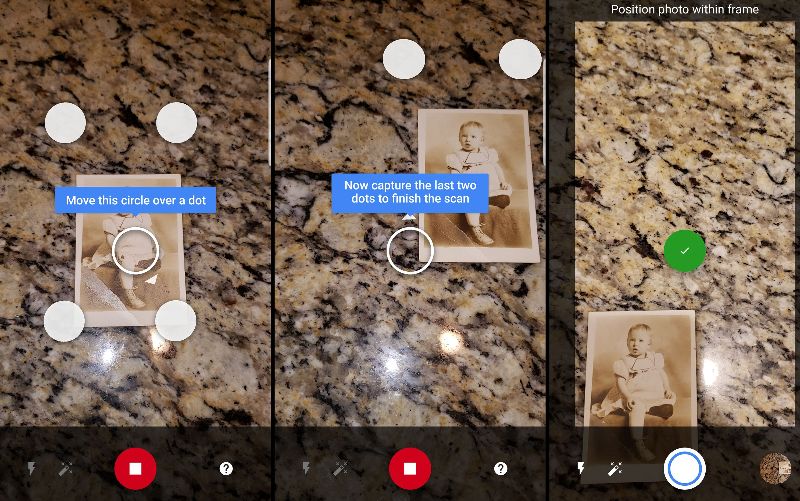
Google PhotoScan is a pocket scanner that digitizes a print in seconds. It is free on the App Store and Google Play, with no ads or hidden purchases, and its standout trick is glare removal: instead of one flat photo of a photo, it captures the print from four angles and stitches a glare-free image. That makes it ideal for glossy prints that reflect overhead light.
How to use?
- Launch the application.
- Place the photo in front and follow the instructions as shown in the image.
- Save the image.
Method 2: Photomyne
Price: Photomyne's core scanning is free; some advanced features require a subscription.
Where PhotoScan handles one print at a time, Photomyne's strength is volume. Its AI detects multiple photos laid out together, scans them in a single shot, and auto-crops each one along its border. You can tag each image with names and dates, and even attach an audio recording — handy when an older relative can narrate who is in the picture.
How to use?
- Launch the application and open the camera in it.
- Place the photos in front and let the app scan them.
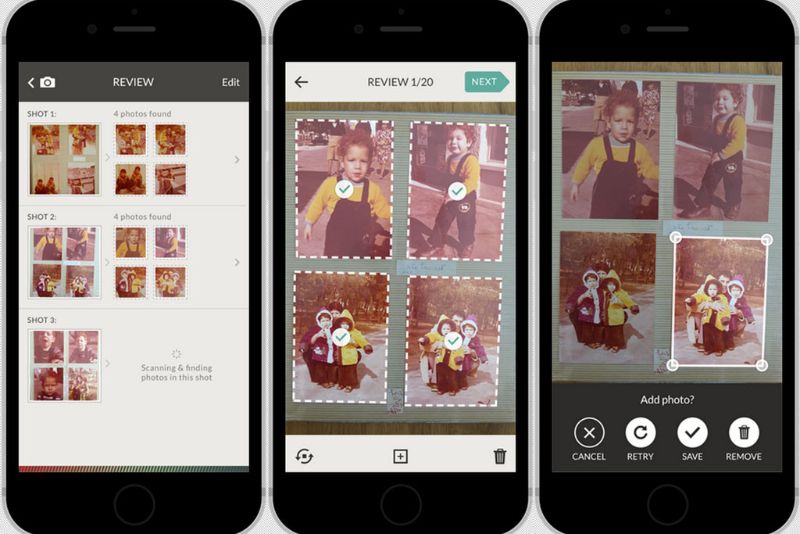
- Edit them and save them.
Method 3: A flatbed or dedicated photo scanner
Price: hardware only, from budget flatbeds to fast dedicated photo scanners.
When the photos genuinely matter — a grandparent's portrait, a one-of-a-kind print — a scanner still beats a phone for raw detail. A flatbed captures fine grain and accurate color at high resolution, and dedicated photo scanners can feed a stack of prints automatically. The trade-off is speed: scanning at archival quality is slower than waving a phone over the album, so most people reserve this method for their most precious images and use an app for the rest.
Method 4: A professional scanning service
Price: typically a per-photo or per-box fee.
If you have thousands of prints, slides, or negatives and no desire to scan them yourself, a mail-in service does the work for you. You ship the box, they scan everything to a consistent standard and return your originals with a digital set. It is the most expensive route per photo, but for a large family archive it can be the only realistic option. Whichever way the scans come back, the next step is the same — making them look as good as the day they were taken.
Perfect your digitized photos with VanceAI Photo Restorer
Price: basic tools can be used for free with some credits sent by VanceAI, and you can buy more credits as needed.
Photo Restoration offers an online solution to restore and perfect your digitized old photos in one click. It is powered by AI algorithms that smartly fix the issues old prints develop — cracks, scratches, fading, dust — and it automatically enhances details and faces while it works, so a tired scan comes back sharp and lifelike.
How to use?
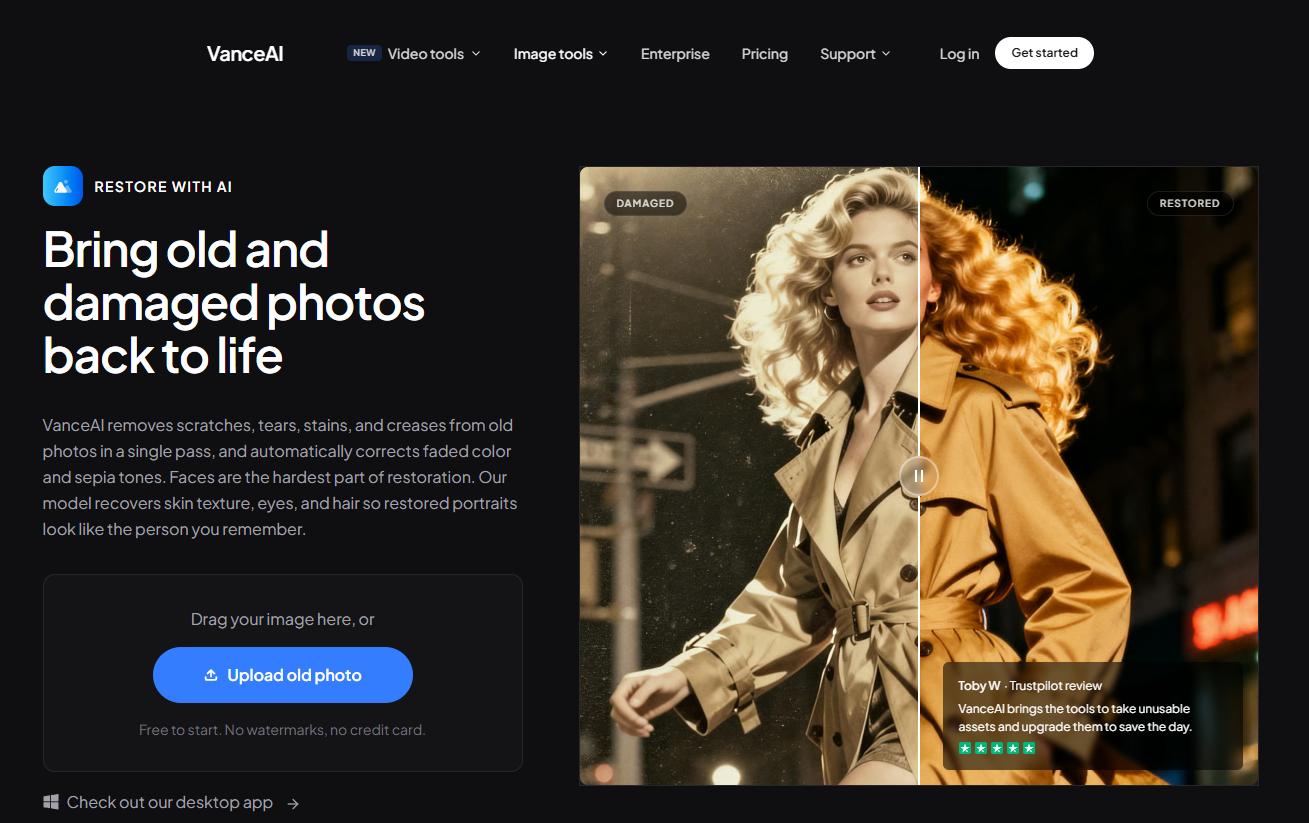
- Click the photo repair page to learn how to use the photo restorer before hitting the Upload Image button in the product page.
- Or you may simply go to VanceAI Restorer Workspace to upload image or choose a sample image and click on Start to Process. The AI restorer will process it automatically.
- Preview > Download Image to save the image to your device.
About VanceAI
VanceAI can be your best choice for online photo editing and quality enhancement, with a bundle of handy tools that run right in your browser. In this guide we used the Photo Restorer as an example of how it helps with old photos, but you can also colorize a black-and-white shot with Photo Colorizer or push detail further with the image enhancer if a restored photo still is not quite where you want it.
Conclusion
The real value of a digital photo is not just that it never fades — it is everything the file lets you do afterward. Once a print lives on your phone, you can share it with family in seconds, print a new enlargement, or hand it to an AI restorer to undo decades of damage. Pick the capture method that fits your collection, finish with a quick restoration pass, and a shoebox of fading prints becomes an archive that lasts.
FAQs
What is the best way to digitize old photos?
For most people the best way to digitize old photos is a free mobile app like Google PhotoScan, because nearly everyone owns a smartphone and the results are good enough for sharing and printing. If a print is rare or precious, a flatbed scanner captures more detail, and a professional service is worth it when you have thousands of images. Whichever you choose, finish with AI restoration to clean up the scan.
How do I digitize old print photos with a scanner?
Place the photo face-down on a flatbed scanner, set the resolution to at least 300–600 DPI for prints, choose color mode even for black-and-white originals, and preview before the final scan. Save as a high-quality JPG or, for archival copies, a TIFF. Scanners are slower than phone apps but give you the sharpest, most color-accurate results.
How do I digitize photos with my smartphone?
Download a scanning app such as Google PhotoScan or Photomyne, open the camera inside the app, and hold the print in the frame in even light. The app automatically detects the borders, removes glare, crops the image, and saves a clean digital copy to your phone — no scanner required.
Can I digitize photos for free?
Yes. Google PhotoScan and the core features of Photomyne are both free, so you can scan an entire album without spending anything. VanceAI also sends free credits to new users, which is enough to restore and enhance a batch of scanned photos before deciding whether you need more.
What resolution should I scan old photos at?
For standard prints you plan to view or share, 300 DPI is fine. If you want to reprint photos larger than the original or preserve maximum detail, scan at 600 DPI. Going higher mainly helps with very small prints or when you intend to crop in tightly. Phone scanning apps handle this automatically and produce share-ready files.
How can I fix damaged or faded photos after scanning?
Run the scan through VanceAI Photo Restorer. The AI detects cracks, scratches, dust, and fading and repairs them in one click, while also sharpening faces and recovering detail. It works in your browser, so there is nothing to install — you upload the scan, let it process, and download the restored image.
Does VanceAI Photo Restorer work in a web browser?
Yes. VanceAI is an online, browser-based service, so you can restore digitized photos on Windows, Mac, or Chromebook without downloading software. You simply open the workspace, upload your scanned image, and the AI processes it on VanceAI's servers, then lets you download the result.
How much does VanceAI cost?
VanceAI uses a credit-based system rather than a one-time purchase. New users get free credits to try the tools, and you can top up with pay-as-you-go credit packs or a monthly subscription depending on how many photos you process. Unused credits roll over, and there is a money-back guarantee, so you only pay for what you actually need.
Can I digitize photos without losing quality?
Capture is the key step: scan or photograph in good, even light at a high enough resolution, and avoid recompressing the file repeatedly. A good scan preserves nearly all the detail in the original print. If the print itself has already faded or yellowed, AI restoration can recover much of what time has taken, so the digital copy can actually look better than the paper it came from.
Is it better to scan photos myself or use a service?
Scan them yourself when you have time and a manageable number of photos — it is free or cheap and you keep full control. Use a professional service when the collection runs into the thousands, includes slides or negatives, or when you simply will not get around to doing it by hand. Either way, the digital files benefit from a final restoration and enhancement pass.