Why Pictures Turn Out Blurry (and Which Blur You Can Fix)
Before you fix a blurry photo, it helps to know what caused it — because the cause decides how recoverable the shot is:
- Motion blur — the subject moved (or you did) while the shutter was open. Directional streaking is the giveaway.
- Camera shake — handheld shots at slow shutter speeds; the whole frame looks softly doubled.
- Out-of-focus / soft focus — the lens locked focus on the wrong plane, so edges lack bite.
- Low resolution / upscaling blur — a small image stretched too large turns mushy and pixelated.
- Compression blur — heavy JPEG compression smears fine texture and adds blocky artifacts.
Mild to moderate blur from any of these is exactly what an AI sharpen model is trained to reverse. Severe, unrecoverable blur (a completely smeared face, for example) can be improved but not fully restored — AI reconstructs plausible detail, it does not invent a sharp photo from nothing.
Fastest Fix: Make a Blurry Picture Clear with VanceAI (Step by Step)
The quickest route is VanceAI Image Sharpener, a browser-based tool with a dedicated Sharpen model built for exactly this problem — deblurring photos ruined by a fast-moving subject, camera shake, or soft focus. It runs online (nothing to install) and returns a clear result in seconds.
Here is the exhaustive process so you get the best result.
1. Go to the official website
Visit the VanceAI official website and open the top-menu section labeled Solutions. From the dropdown, select AI Image Sharpener. Everything runs in your browser, so there is no download or sign-up wall to clear first.
2. Upload a blurry image
Hit the Upload Image button and select a bad-quality picture from your computer — a blurry wallpaper, a shaky night shot, a soft product photo. If you just want a quick look at how the sharpener performs, you can preview the effect in real time and see your unpixelated image before committing any credits.
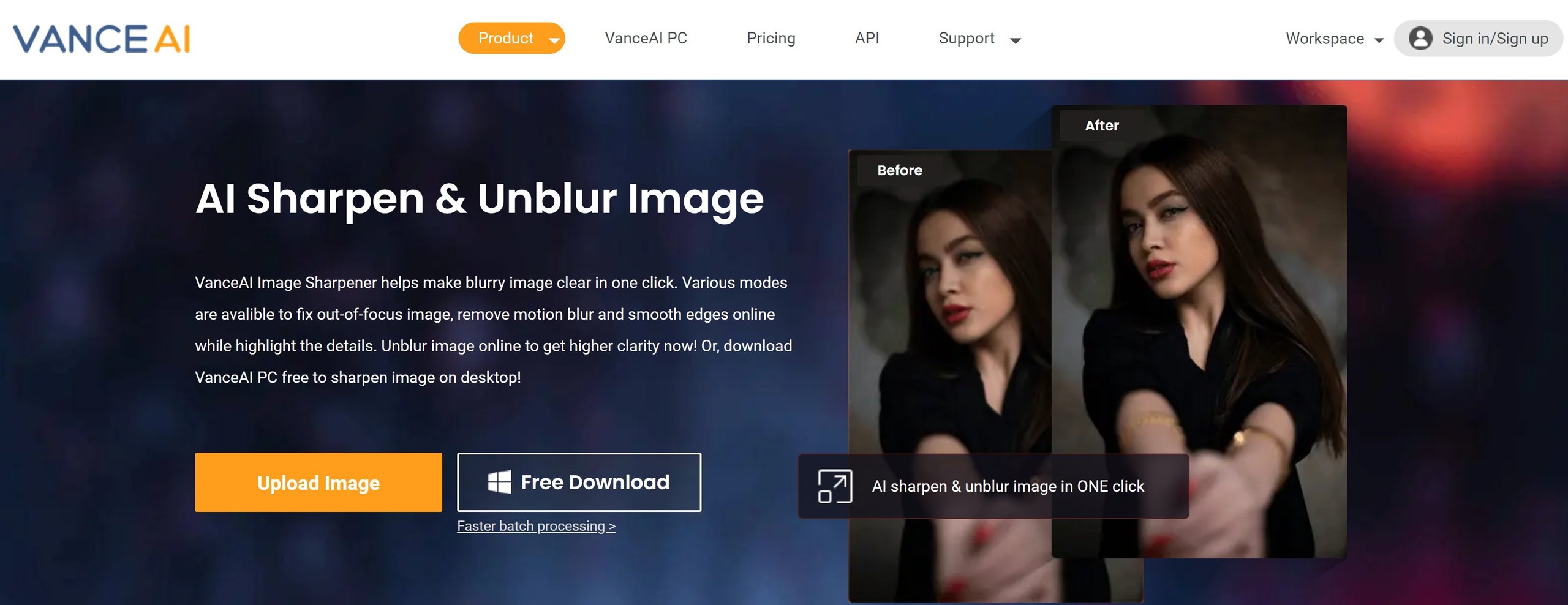
For bulk work, VanceAI also offers full-featured desktop software that fixes blurry photos and processes local images in batches with more customization — handy if you regularly clear dozens of shots at once and want the same Sharpen model offline.
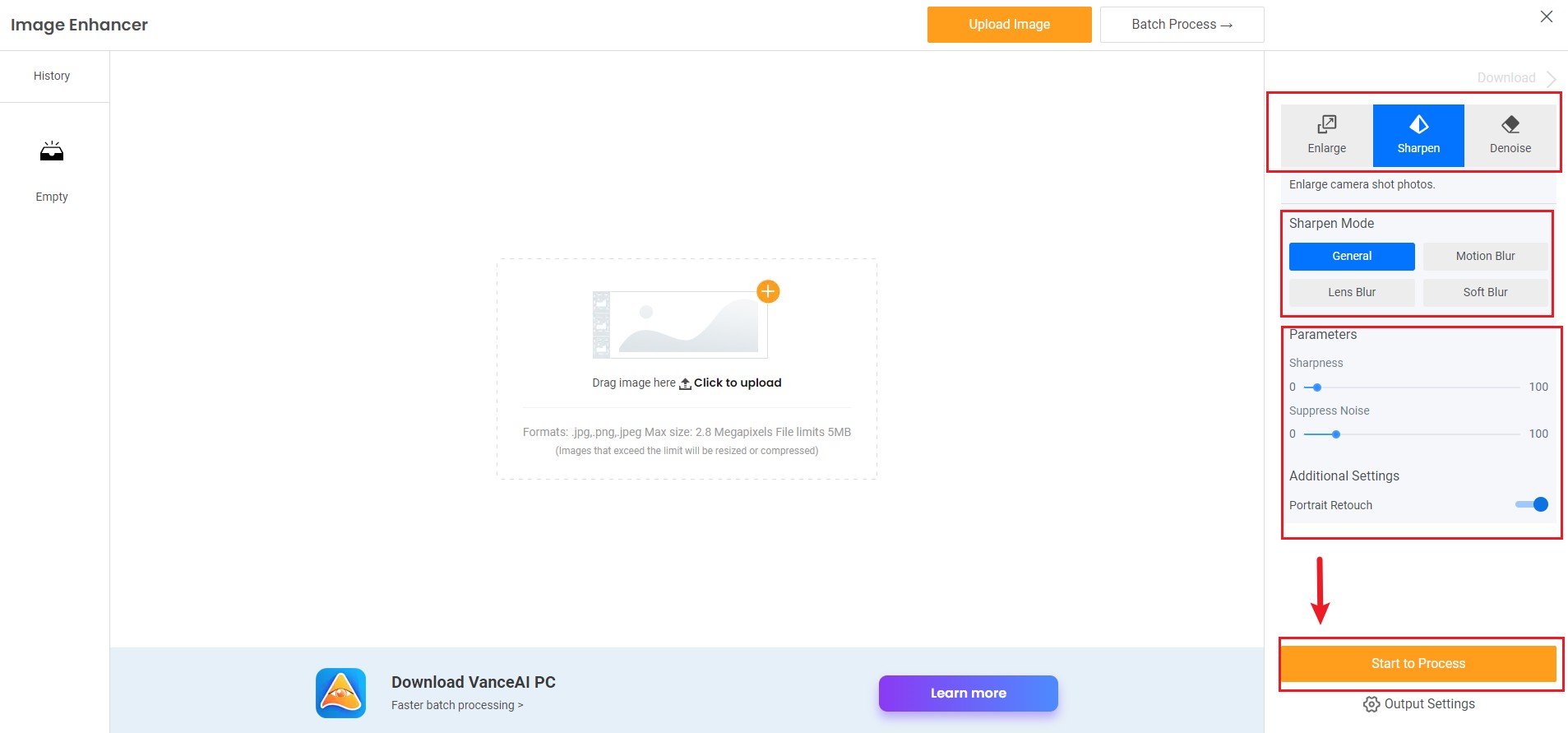
3. Adjust the level to make the picture clearer
The tool processes your image and clears it automatically once the parameters are set, giving you a Before and After view of the result. Click Start to Process and let the Sharpen model reconstruct the edges and texture.
4. Preview and download the sharpened image
Now you can download the result immediately, or fine-tune it. To sharpen further, drag the slider to a new value anywhere between 0 and 100 — higher values push more aggressive deblurring, lower values keep the look natural and avoid over-sharpening halos. That is the whole process of making a blurry picture clear.
5. Further edit the result (optional)
Since you are already here, you can stack a couple of extra fixes. Use the Denoise and Enlarge options to clean grain and boost resolution, which matters most when your original was both blurry and small. If you want a broader all-in-one polish, a general image quality enhancer can lift color, contrast, and sharpness together. Related detail-recovery workflows like fix chromatic aberration pair well when colored fringing shows up alongside the blur.
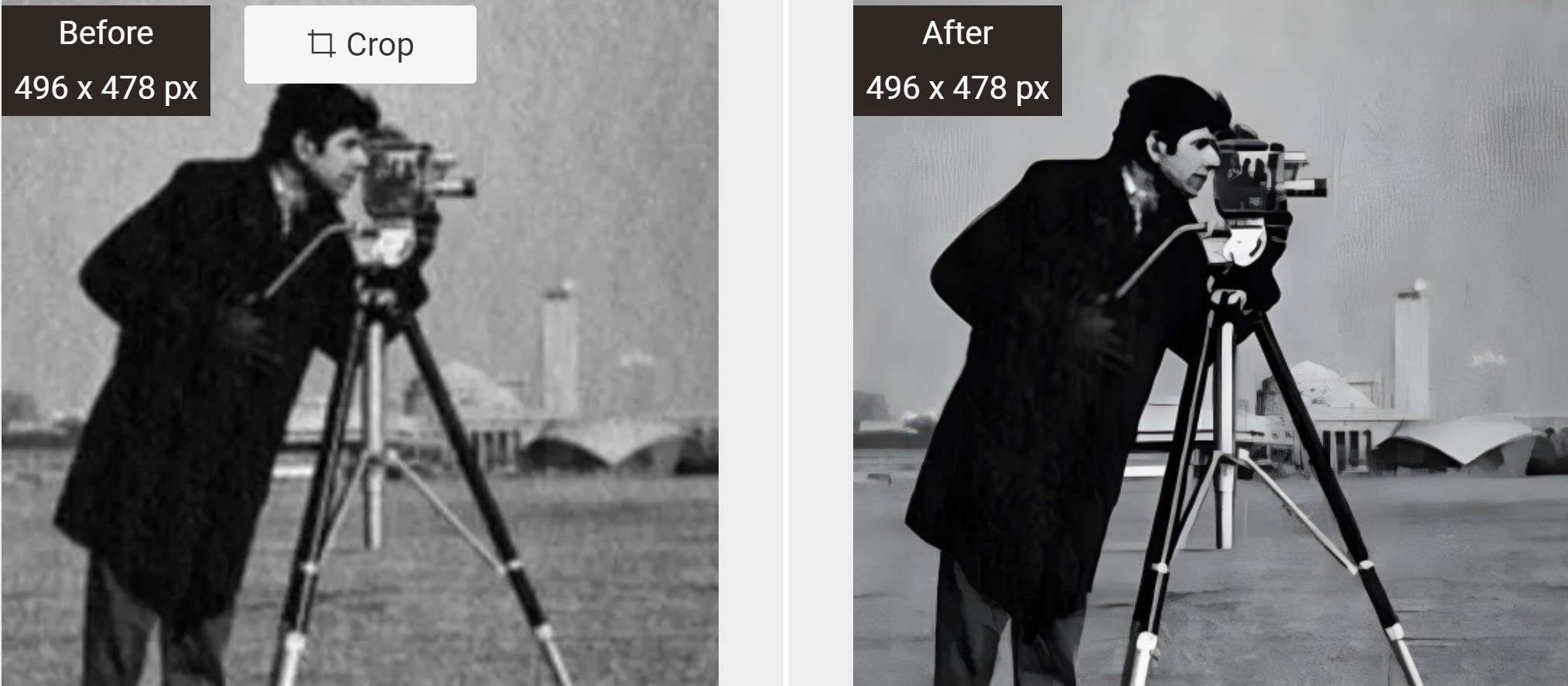
When you are happy with the quality, click Download Image and you are done.
VanceAI vs Other Ways to Unblur a Photo
Not every method suits every photo. Here is an honest comparison of the common options, with the fastest pick first.
| Tool / Method | Best for | Learning curve | Cost |
|---|
| VanceAI Image Sharpener ⭐ | One-click deblur of motion/shake/soft focus, online | None | Free preview + credits |
| Topaz Sharpen AI | Desktop pros wanting granular control | Steep | One-time desktop license |
| Photoshop Smart Sharpen | Manual, layer-based retouching | High | Subscription |
| Free mobile "unblur" apps | Quick casual fixes on phone | Low | Ads / limited output |
| Reshooting the photo | When the subject is still available | — | Free but often impossible |
VanceAI wins for most people because it needs zero skills, runs in the browser, and applies a purpose-built Sharpen model rather than a generic filter — you upload, adjust one slider, and download. Topaz and Photoshop give more manual control but demand time and expertise, and free phone apps tend to smear detail or watermark the result.
See the Difference: Before and After
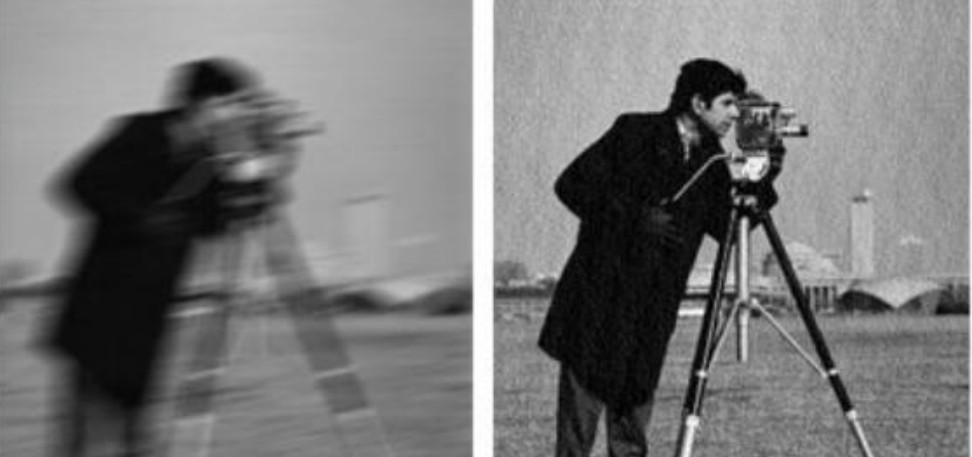
The proof is in the pixels. A shot that arrives soft and unusable comes back with crisp edges, readable text, and recovered texture — the kind of detail you would otherwise lose forever.
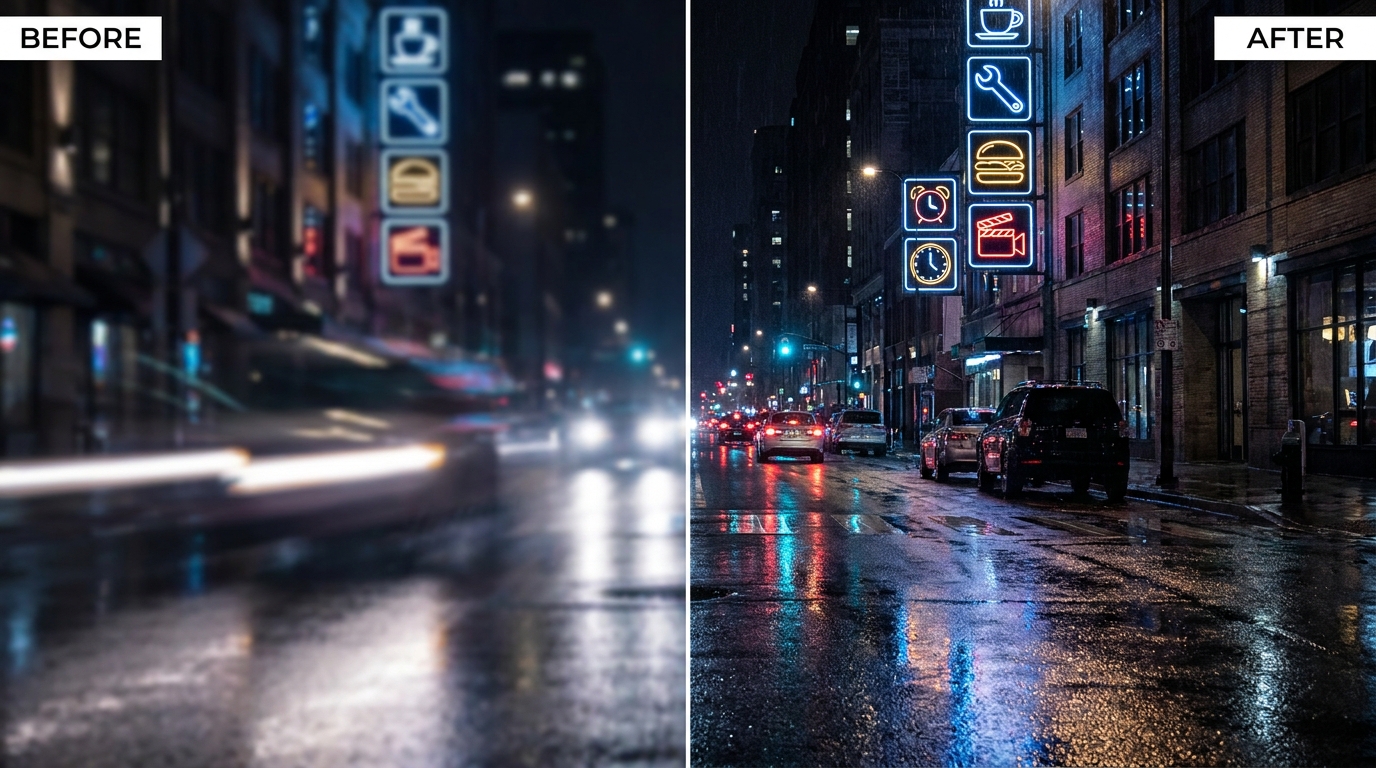
Notice how the left half stays soft and smeared while the right half snaps into focus with defined edges. That edge reconstruction — not just added contrast — is what separates a real AI sharpen model from a basic "sharpen" slider.
Tips to Get the Clearest Result
- Start from the highest-quality original you have. Sharpening a screenshot of a screenshot fights a losing battle.
- Do not over-sharpen. If halos or crunchy edges appear, dial the slider back — natural beats brittle.
- Fix blur first, then upscale. Deblur, then enlarge, so you are not magnifying the blur. For small originals, a DPI boost workflow helps after sharpening.
- Denoise noisy night shots before or alongside sharpening so the model does not lock onto grain.
Frequently Asked Questions
Is VanceAI free to make a blurry picture clear?
You can preview the sharpened result for free before spending anything. Full-resolution downloads use VanceAI's credit system, so you only pay for what you process rather than a fixed per-image fee.
How does VanceAI's credit system work?
VanceAI runs on credits instead of per-tool prices. Monthly plans start at Starter ($4.95 / 100 credits), Standard ($7.95 / 200), Pro ($12.95 / 500), and Premium ($17.95 / 1000), and there is a pay-as-you-go option. Unused credits roll over up to 5×, and there is a 7-day money-back window when less than 10% of credits are used.
Can AI really fix a very blurry photo?
AI can dramatically improve mild to moderate blur from motion, shake, or soft focus by reconstructing edges and texture. Extremely severe blur — where detail is completely gone — can be improved but not perfectly restored, because the tool reconstructs plausible detail rather than inventing a missing original.
VanceAI Image Sharpener accepts common formats like JPG, JPEG, and PNG, which covers the vast majority of photos from phones, cameras, and the web.
Does VanceAI work on my phone?
Yes. Because the Image Sharpener runs in the browser, it works on desktop and mobile without installing anything. For heavy batch jobs, the desktop app adds offline processing and more control.
How do I fix motion blur specifically?
Upload the photo to VanceAI Image Sharpener, run the Sharpen model, and increase the slider gradually. Motion blur with clear directional streaking responds well; check the before/after preview and stop before edges look unnatural.
VanceAI vs Topaz Sharpen AI — which is better?
Choose VanceAI if you want a fast, no-install, one-slider fix in the browser. Choose Topaz if you are a desktop power user who wants granular manual control and does not mind a steeper learning curve and a paid license.
Will sharpening reduce my image quality?
Done right, no — it recovers detail. Over-sharpening can introduce halos and crunchy edges, so lower the slider if that happens. Pairing sharpening with Denoise keeps results clean on grainy shots.
Can I unblur and enlarge at the same time?
Yes. After sharpening, use the Enlarge option so you upscale a clear image instead of magnifying blur. This order gives noticeably crisper large prints and wallpapers.
Does VanceAI require an internet connection?
The online Image Sharpener needs internet since it runs in your browser. If you need offline processing, VanceAI's desktop software runs the same Sharpen model locally and handles batches.
Final Thoughts
An AI Image Sharpener offers an elegant solution to a problem most of us have battled for years. Sometimes a blurred background is a deliberate, beautiful choice — but when the blur is accidental, it can ruin an otherwise great shot, and it is worse still when the subject in the foreground is the soft one. With a purpose-built Sharpen model doing the heavy lifting, you no longer have to accept that. Upload your photo, nudge one slider, and make that blurry picture clear in seconds.