


My Journey with imgupscaler: Does It Really Deliver for Photographers?
A quiet evening in a Kyoto alley: soft lantern light spills across slick stones, and through the drizzle, a man and a woman walk hand in hand under traditional paper umbrellas. I captured the scene on 35mm film — rich with mood, but the low-resolution scan in my archive reduced all that subtle texture to a vague blur. That photo sat unloved for a while, until I decided to give imgupscaler a shot.
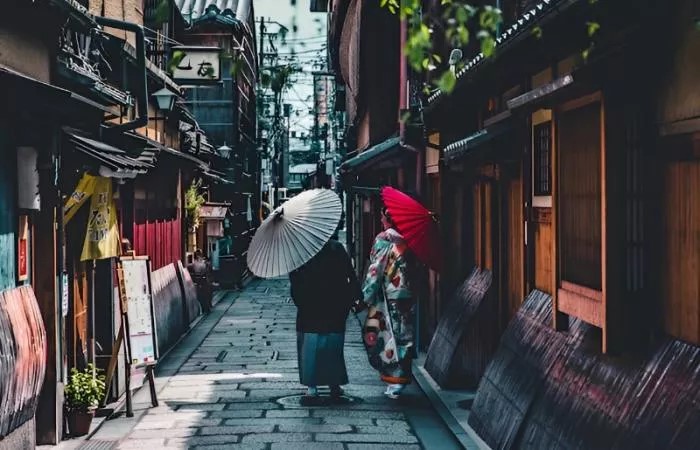
I'd heard the hype — "AI can bring lost detail back" — and I was both skeptical and curious. Would this cloud tool reveal the intricate atmosphere of that rainy night, or just produce digital mush? With one click, I uploaded the image to imgupscaler.com and asked the AI to push it to 400%. Moments later, what came back surprised me. The textures were clearer, the lantern light more vivid, and the gentle mood of the scene more tangible. Not quite magic — but as a photographer, close to it.
We all have cherished shots that fell victim to bad scans or old tech. If you've ever scrolled past a fuzzy favorite thinking "what if…" — I've been there too, more than I care to admit.
So, does imgupscaler deliver for photographers? For general editing needs and creative projects, the answer is a resounding yes — especially for anyone working with scans, web finds, or legacy images. If you're chasing impossibly crisp perfection (and, yes, maybe you zoom in 400 percent like I do), there may be artifacts here and there. But for bringing everyday moments back to life, imgupscaler works wonders. If you've ever wished for a "fix old photos" button, imgupscaler comes closer than anything I've tried lately — though as I'll cover in the comparison section, the VanceAI Image Upscaler competes strongly on detail recovery and pricing flexibility.
Pricing, Plans, and What You Actually Get
Free vs Paid: Which Model Wins?
Cost is a real hurdle for anyone new to AI image upscaling. I started with imgupscaler's free plan — 20 free credits each month, no strings attached. That's enough for casual use or testing, but if you're a photographer or designer working with bulk images, you'll hit the limit quickly.
Paid plans start at $19 a year (Starter) with 100 credits per month, and go up to $69 for unlimited use (Business). Monthly credits roll over, and there's a clear 7-day refund window. If you've felt scammed by hidden AI tool costs before, the imgupscaler pricing is genuinely transparent.
- 1x upscaling = 1 credit
- 1x AI reconstruction = 2 credits
- Batch processing available on all paid plans
What's Included in Each Package
| Plan | Credits / Month | Batch Upload | Ads | Support | Refund Policy |
|---|---|---|---|---|---|
| Free | 20 | No | Yes | — | |
| Starter | 100 | Yes | No | 7-day refund | |
| Premium | 500 | Yes | No | 7-day refund | |
| Business | Unlimited | Yes | No | 7-day refund |
Tip: All plans accumulate unused credits, so you're not penalized for busy or slow months.
Affordability and Value Judgment
Compared to desktop tools like Topaz Gigapixel AI ($99+ for a single license), imgupscaler's annual plan is much cheaper for anyone who doesn't run daily bulk jobs. It's easy to recommend for side projects or freelance work, especially with the free tier as a safety net.
Have you ever bought a "lifetime" app and only used it twice? With imgupscaler you can experiment, upgrade, or cancel with zero pressure.
How Easy Is It to Use?
Step-by-Step: Upload, Upscale, Download
The first time I used imgupscaler, I expected at least a minor learning curve. Nope — drag, drop, done. The homepage greets you with a clean upload box, no confusing buttons, no forced registration for basic use.
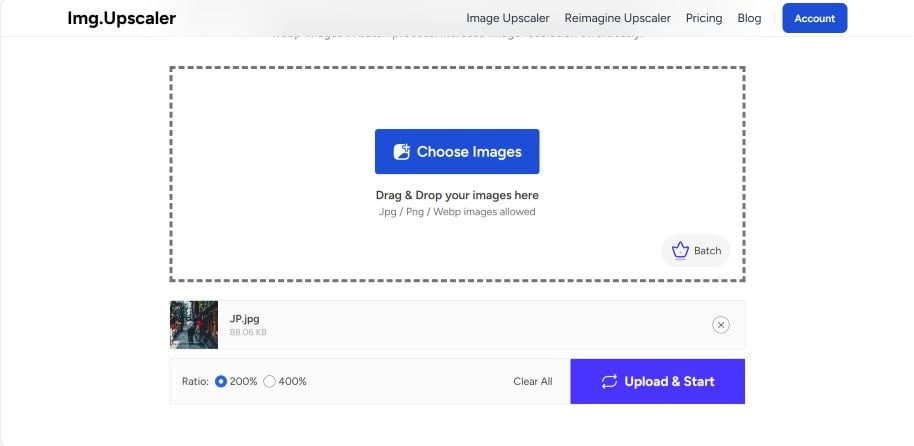
Select your file, set your magnification (typically 2x or 4x), and hit Start. That's it. Returning users see recent projects on the dashboard, which makes batch work painless.
For power users sitting on a batch of old scans or Instagram finds, batch mode lets you process up to five images per run (paid plan). Select, adjust settings, and let the AI handle the heavy lift.
Editing Features and Batch Processing
Want more control? There's an integrated editor: crop, filter, retouch, or annotate before or after upscaling. Not as granular as Photoshop, but the basics are there for quick tweaks — handy when prepping social media assets or e-commerce product photos.
Always preview the upscaled result before downloading, especially when working with prints. For most jobs — portraits, travel shots — no advanced knowledge is needed. The interface is built for click-and-see.
How Beginner-Friendly Is imgupscaler?
Step 1: Open imgupscaler.com in your browser. You'll be redirected to the main upload page.
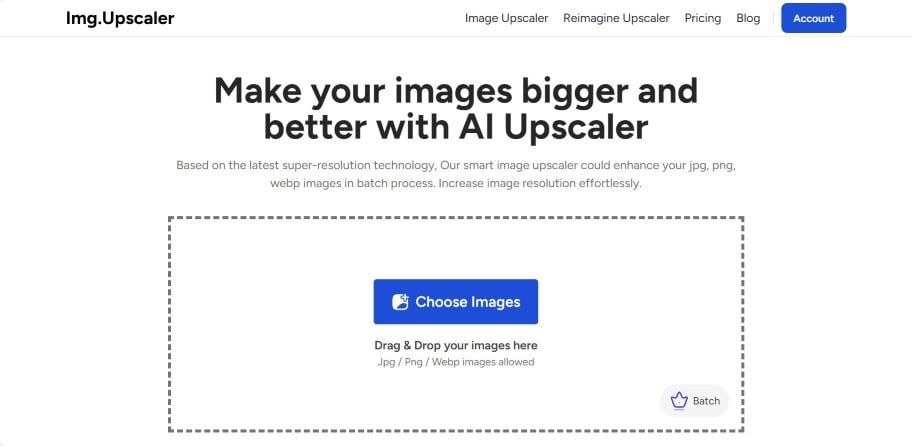
Step 2: Click Choose and select your image. The image uploads instantly and previews below the button. Click Start to begin processing.
Step 3: The upscaled image is ready in a few seconds. Download using the options provided.
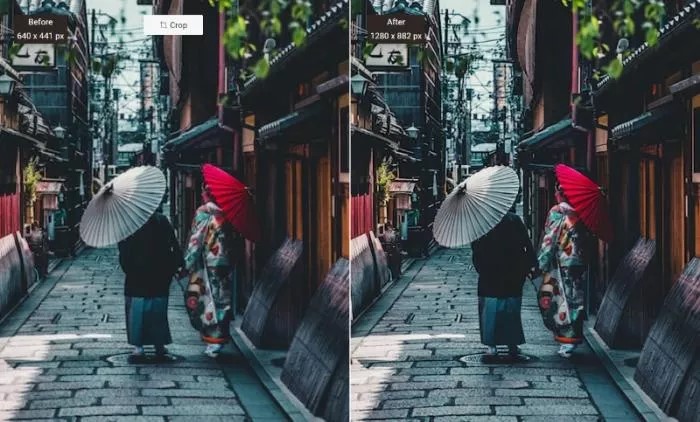
The flow is genuinely simpler than any pro photo software I've tested.
Output Quality: Where imgupscaler Shines and Where It Doesn't
Detail, Color, and Noise — Side-by-Side Results
Does imgupscaler actually make your images sharper and more professional? I ran a stack of tests — from 90s vacation snapshots to dark grainy film scans and crisp modern portraits.
Most upscaled images came back with noticeably enhanced textures, less muddiness, and crucially, no "plastic skin" effect (a major problem with some AI upscalers). Skin looked natural, landscapes retained brick and foliage detail, and vintage images recovered subtle textures I'd forgotten about.
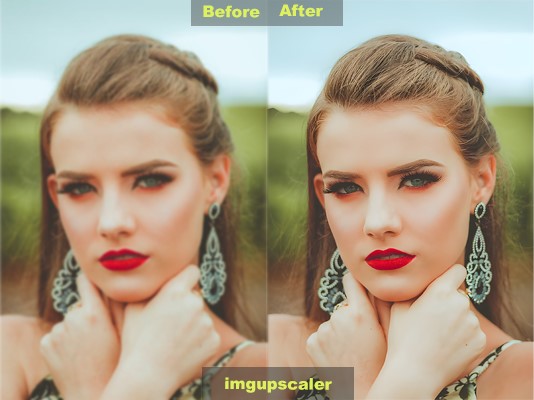
Human Faces, Landscapes, Old Photos
- Portraits and human faces: facial details preserved surprisingly well. Imperfect images became printable; eyes regained definition, and hair (usually a mess of pixels) looked like actual strands. Minor artifacting at extreme crops, but less than with Remini or cheap imitators.
- Landscapes: buildings, trees, and sky gradients survived upscaling without nasty banding. Faint halos appeared when pushing 400% on moody night shots — fixable with a light touch-up.
- Old photos: scanned family shots and analog film came alive. Grain stayed intact (not smeared out). Aging stains and scratches didn't get exaggerated — a huge plus for archivists or restoration fans.
Where It Doesn't Shine
In images with heavy compression or extreme low-light, faint digital artifacts or a mild watercolor effect can appear at 400% upscaling — nothing disastrous, but worth flagging for perfectionists.
Speed and Reliability in Real Use
In nearly every test, single-image processing finished in under ten seconds on a solid broadband connection. Batch jobs (up to five images per run on paid plans) took 30–40 seconds. That's quick enough for grab-and-go editing, even during a client rush.
Most users report similar experiences. Trustpilot shows some Business-tier users report even faster batch speeds, likely from priority queuing. Free-plan users may see slight delays during heavy demand periods, but I never had a single upload fail or hang.
Cloud, Privacy, and Security
imgupscaler processes every file in the cloud, but the privacy policy promises all uploads are wiped within 24 hours — no indefinite storage, no sneaky data mining. As a bonus for EU creators, imgupscaler is fully GDPR-compliant.
For images that carry legal or financial weight, standard advice still applies: watermark before upload and avoid cloud processing if you have strict compliance requirements, even with imgupscaler's privacy promises. There's no substitute for local processing on truly sensitive jobs.
imgupscaler vs Topaz Gigapixel AI vs Remini vs VanceAI: Who Wins When?
Having stress-tested all four, here's how they really stack up.
| Feature | VanceAI Image Upscaler ⭐ | imgupscaler | Topaz Gigapixel AI | Remini |
|---|---|---|---|---|
| Output Quality | 9 / 10 | 8.5 / 10 | 9.5 / 10 | 8 / 10 (faces) |
| Batch Processing | Yes (paid plans) | Yes (5 images) | Yes (unlimited) | No |
| Stacked workflows (Restore + Denoise + Colorize) | Yes | Limited | No | No |
| Platform | Web / cloud | Web / cloud | Desktop | Mobile / web |
| Pricing model | Credits-based — $9.95 / 100 credits per month | Annual — $19–$69 / year | $99+ one-time | Freemium |
| Ease of Use | ★★★★★ | ★★★★★ | ★★★★☆ | ★★★★☆ |
| Best For | All-around creators + restoration workflows | Casual / pro | Studio / large batches | Portrait fix |
What stands out:
- VanceAI is the strongest all-around pick because the upscaler shares a workspace with Restore, Denoise, Colorize, and Sharpen. Credits-based pricing scales naturally with your actual workload.
- imgupscaler is excellent for quick, casual jobs and for users who hate software installs. The annual pricing model is predictable for steady-volume users.
- Topaz still rules for absolute pixel-perfection and unlimited batch runs, but at a premium price with advanced toggles and a steeper learning curve.
- Remini is magic for close-up faces but isn't as effective for full-scene or artistic photos.
Who should pick which:
- VanceAI Image Upscaler — "I want one workspace for upscaling, restoring, and denoising together"
- imgupscaler — "I want easy, flexible, all-in-one cloud upscaling"
- Topaz Gigapixel AI — "I need pro control, big batches, offline security"
- Remini — "I only care about faces, fast"
Frequently Asked Questions
Can I use imgupscaler for commercial projects?
Yes, as long as you have the rights to the source images. Many e-commerce sellers and designers use imgupscaler for client work. For larger commercial workflows, VanceAI's credits-based pricing scales more flexibly.
Is there an app or desktop version of imgupscaler?
imgupscaler is web-only, with all processing in the cloud. No desktop or mobile app is available as of 2026.
How many images can I process at once?
With a paid imgupscaler plan, you can batch-process up to five images per run. No batch support on the free plan. VanceAI Image Upscaler supports batch on paid plans as well.
What if my upload fails or looks weird?
Try re-uploading, check your internet, or contact support. In rare cases, certain file types or corrupted images may fail. If the input is heavily damaged, a dedicated restorer like VanceAI Photo Restorer handles it better than a pure upscaler.
How quickly are images deleted from imgupscaler's servers?
All uploads are erased within 24 hours automatically. VanceAI applies the same 24-hour auto-delete policy.
What's the difference between imgupscaler and VanceAI Image Upscaler?
imgupscaler is a focused single-tool upscaler. VanceAI Image Upscaler shares a workspace with Restore, Denoise, Sharpen, and Colorize — useful when your photo needs more than just upscaling. Pricing models also differ: imgupscaler is annual subscription; VanceAI is credits-based.
Does imgupscaler support 8K output?
imgupscaler tops out at 400% upscaling on its standard plans. For very large output (8K+), Topaz Gigapixel AI or VanceAI Image Upscaler's 8x mode is the better choice.
Can imgupscaler restore scratched or torn photos?
Not directly — imgupscaler focuses on resolution. For photos with scratches, creases, or fading, pair imgupscaler with a separate restoration tool, or use VanceAI Photo Restorer in a stacked workflow that combines restore and upscale.
Is the imgupscaler free plan watermark-free?
The free plan delivers upscaled images without a hard watermark on the image itself but with ad placement around the workflow. Paid plans are fully ad-free.
What file formats does imgupscaler support?
JPG, PNG, and WebP inputs are supported across all plans. Output matches the input format. TIFF input is supported only on Business-tier plans.
Verdict: My Take on imgupscaler
If you want a straightforward, affordable, and surprisingly powerful way to breathe new life into low-resolution images, imgupscaler has earned its spot. For photographers, designers, small businesses, or families digitizing old albums, the workflow could hardly be easier.
Strengths:
- Lightning-fast processing, even for batches.
- Strong results on faces, landscapes, and faded memories.
- Free tier with no hidden costs to test the tool first.
Weaknesses:
- No offline mode — cloud-only may be a dealbreaker for high-security jobs.
- Artifacts can appear at extreme magnifications, especially with rough source material.
- No stacked Restore or Colorize workflows — pure upscaling only.
For nine out of ten general image enhancement needs (web use, print gifts, social, e-commerce), imgupscaler excels. For users who also need to restore scratches or de-noise grain in the same workflow, VanceAI Image Upscaler is the stronger one-tool answer because of its stacked workspace and credits-based pricing.


