Upscaling video means raising its resolution — turning a small, soft 480p or 720p clip into a crisp 1080p or 4K one — using AI to rebuild the detail that a simple stretch would just blur. This guide explains how video upscaling actually works, how far you can realistically push a clip, and the fastest way to do it: VanceAI Video Upscaler upscales footage in your browser with no install, no powerful GPU, and a free trial. Whether you're rescuing an old download or prepping a clip for a big screen, here's how to get a clean result.
What Video Upscaling Actually Does
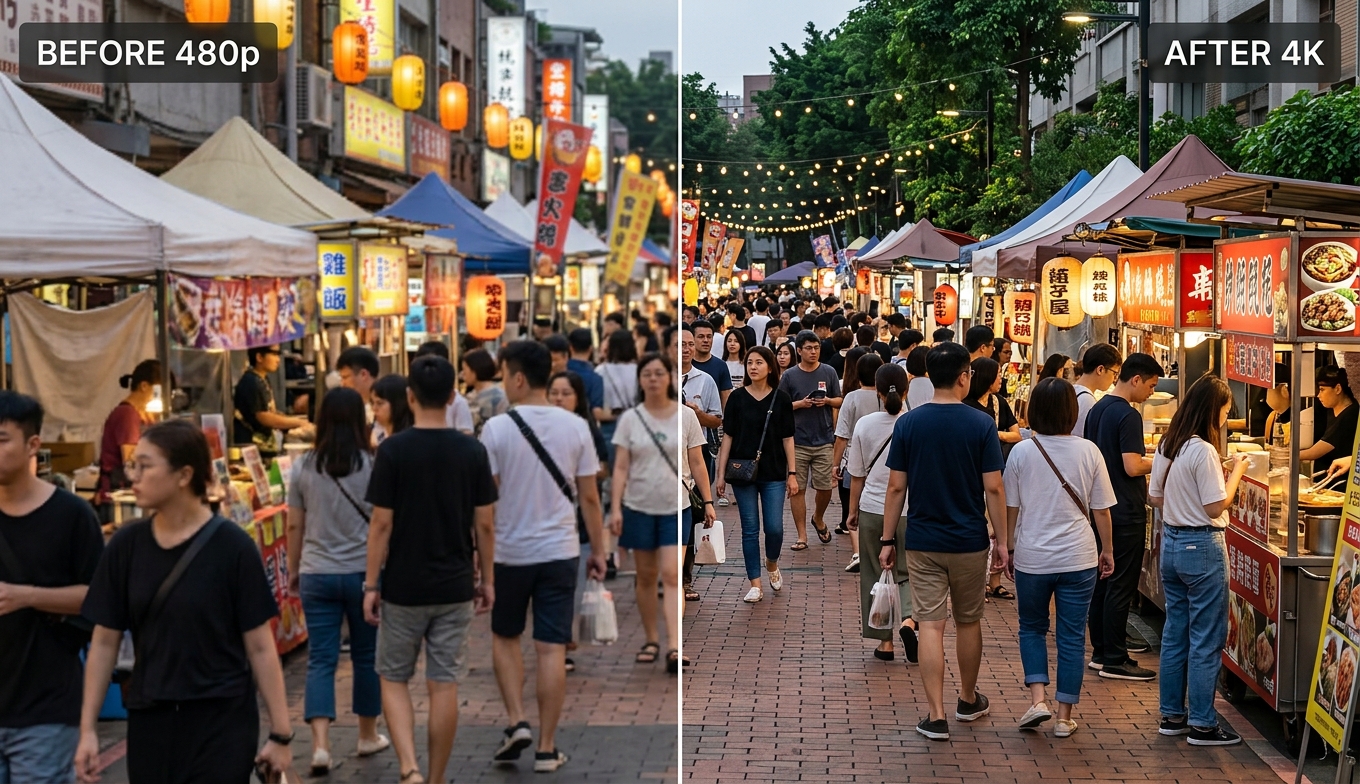
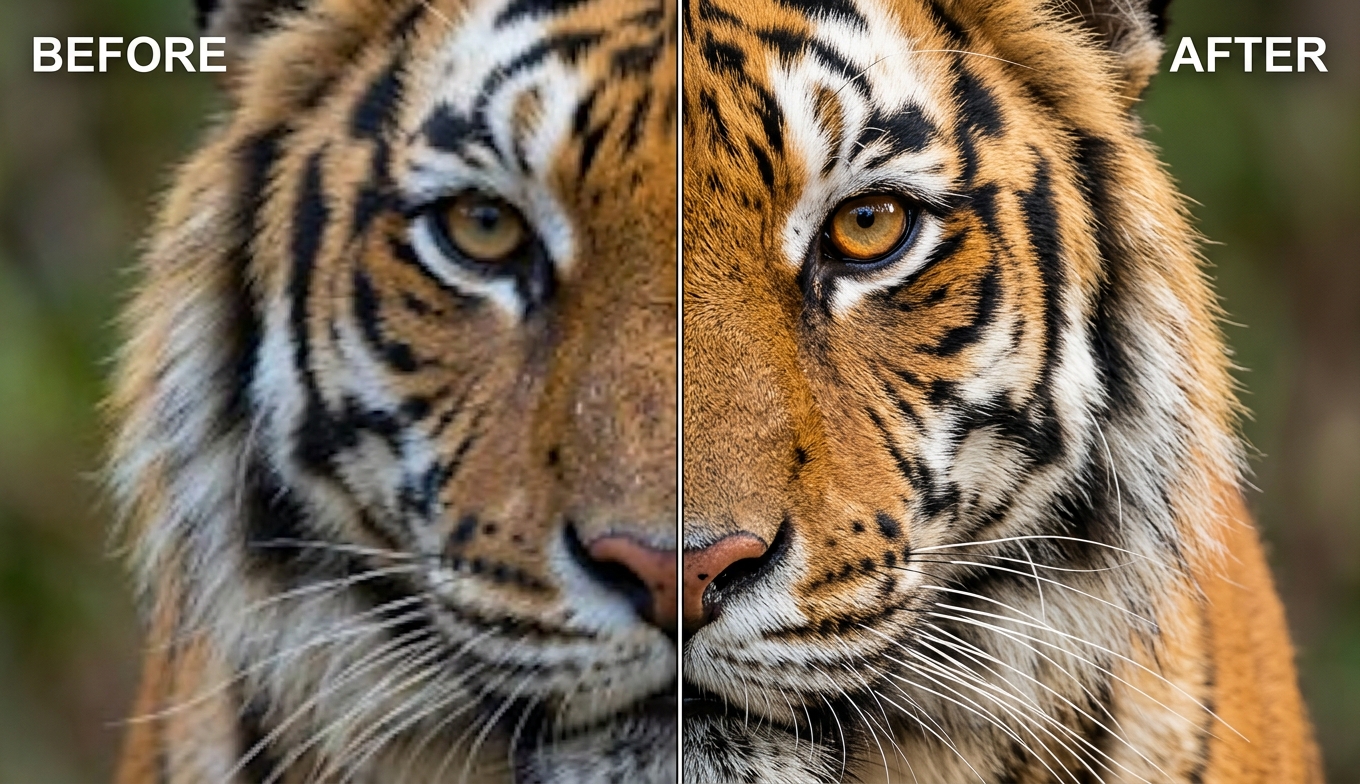
There's a big difference between resizing and upscaling. Resizing a 480p clip to a 4K frame just stretches the existing pixels across a bigger canvas — the result is larger but softer, because there's no new information. AI upscaling does something smarter: a model trained on millions of low- and high-resolution frame pairs predicts what the missing detail should look like and reconstructs it, so edges stay sharp and textures gain believable detail instead of going mushy.
That's why an AI upscaler can take a genuinely small source and produce a clip that holds up on a screen many times its original size. It's also why upscaling pairs naturally with enhancement — cleaning noise and compression at the same time — since a good tool does both in one pass. If you want the wider picture of enhancement plus upscaling, the video quality enhancer guide covers it end to end.
The Easiest Way: Upscale Video Online With VanceAI
For most people the simplest route is VanceAI Video Upscaler. It runs entirely in your browser, so there's nothing to install and no need for a powerful graphics card — the processing happens on VanceAI's servers, and a basic laptop gets the same output as a workstation.
It gives you two purpose-built models so you can match the tool to your footage:
- Nexa — the general-purpose engine for everyday clips. It outputs 720p, 1080p, 1440p, and 4K, with a 1×, 2×, or 4× scale factor.
- Cineva — the cinema-focused model for standard-definition sources up to 1024×540 input, applying a fixed 4× upscale, which is ideal for old or very low-resolution footage.
It accepts MP4 and MOV files up to 10GB and 4K input, returns an MP4 that stays available for three days, and lets you spend a single credit on a five-second preview before committing to the full render — so you confirm the result before you pay for it. Pricing is credit-based, not a subscription: new users get free trial credits with no credit card, and you pay only for what you process.
How to Upscale a Video Step by Step
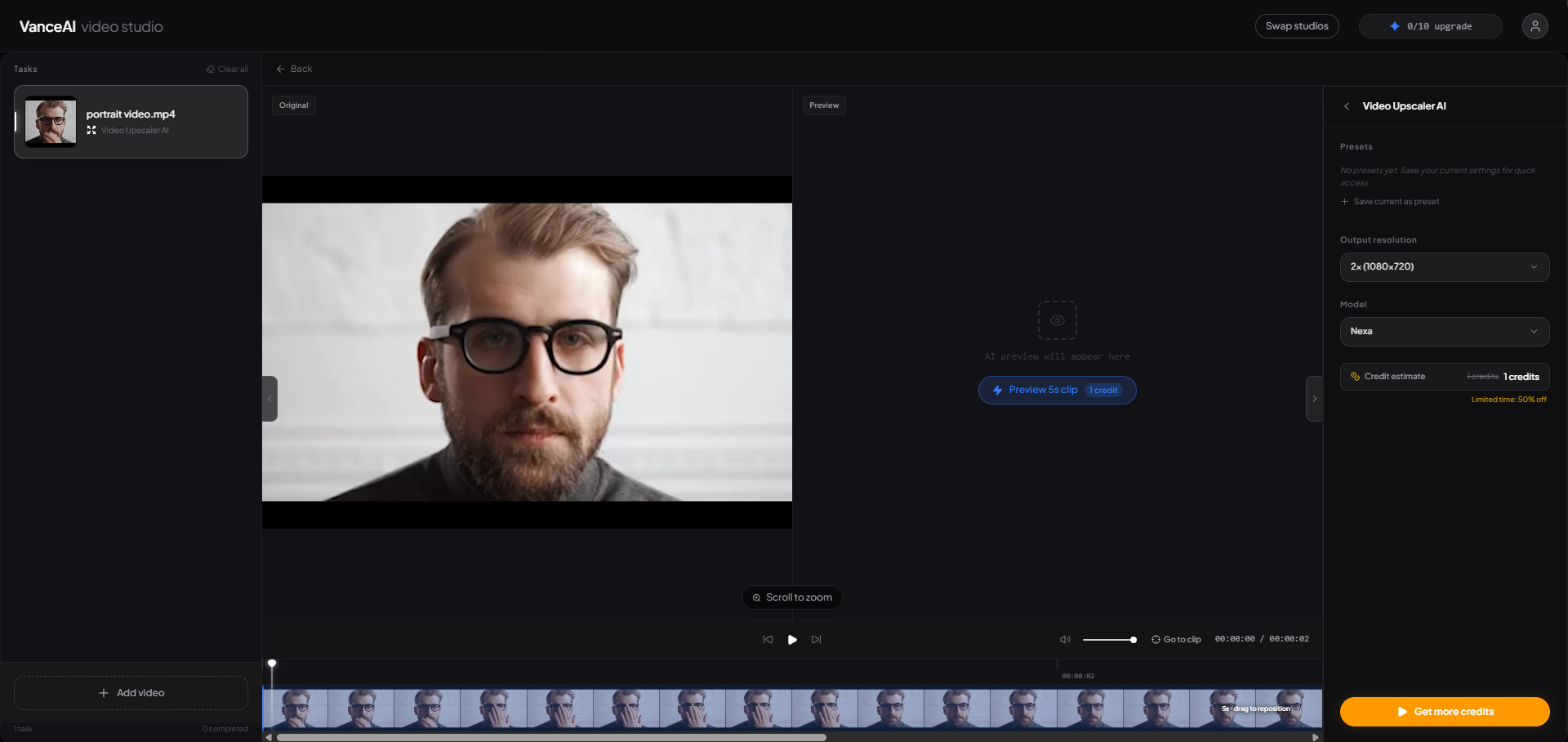
- Open VanceAI Video Upscaler in your browser and upload an MP4 or MOV (up to 10GB, up to 4K input).
- Choose your model — Nexa for everyday footage, Cineva for a standard-definition source.
- Set your target resolution or scale factor (720p to 4K, or 1×/2×/4× on Nexa).
- Click Preview to generate a five-second sample for one credit and confirm the quality.
- Process the full clip and download your MP4 — it stays available for three days.
No install, no GPU, no project file.
How Far Can You Realistically Upscale?
Upscaling has a ceiling set by your source. The more real detail the original holds, the more convincing the result — which is why a clean 1080p clip upscales to gorgeous 4K, while a tiny, damaged 240p clip has limits no tool can fully overcome.
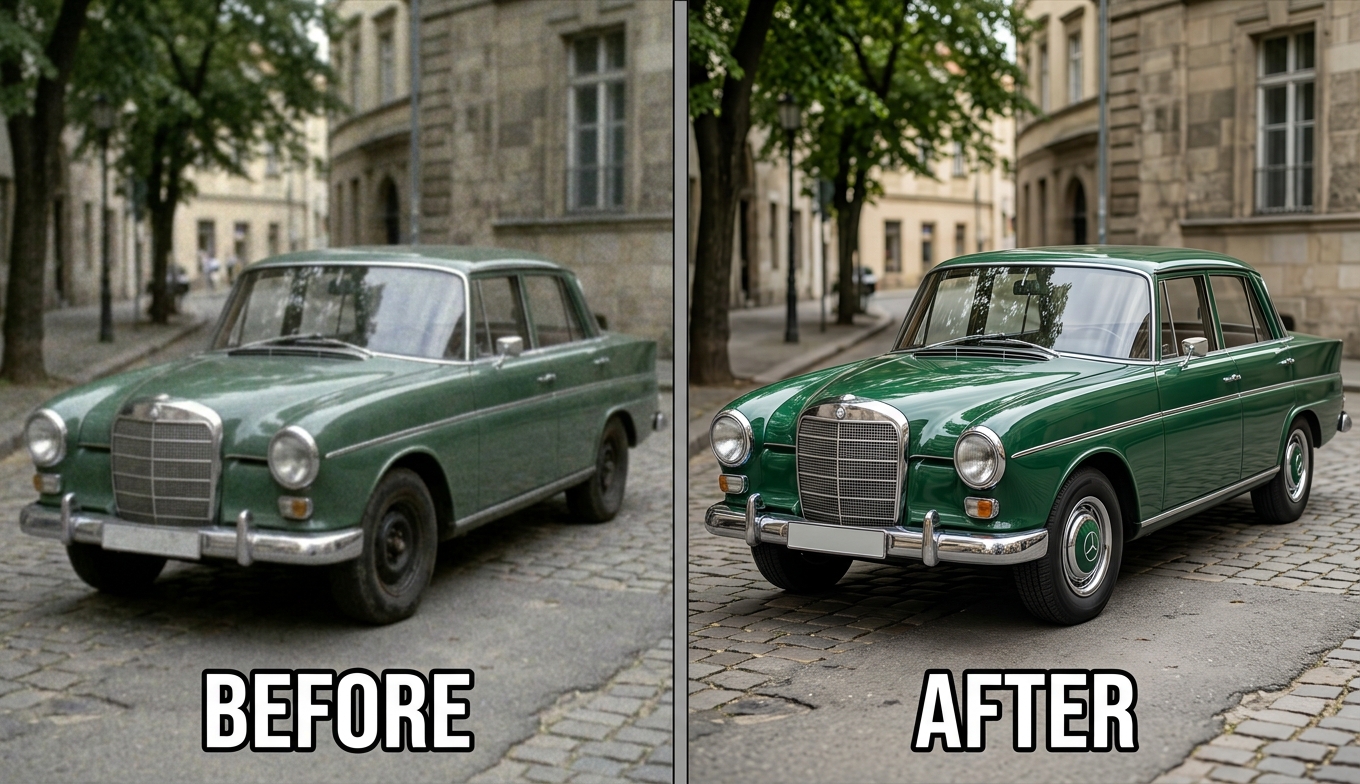
A few common jumps and what to expect:
- 480p → 1080p — a very common, reliable upgrade for old web video; the how to upscale 480p to 1080p guide walks through it.
- 720p/1080p → 4K — the sweet spot; enough real detail exists for the AI to produce a crisp, natural 4K result.
- SD → near-HD — for standard-definition tapes and DVDs, Cineva's 4× upscale is built for exactly this.
One honest note: VanceAI's video output tops out at 4K, which is the right target for the overwhelming majority of footage. Chasing 8K from a low-resolution source mostly enlarges softness while multiplying processing time, so 4K is where to aim.
Other Ways to Upscale Video
A browser tool isn't the only path. Desktop apps like UniFab Video Upscaler AI and Topaz Video AI give you deep manual control and run locally, which suits professionals with strong hardware — at the cost of a subscription, a capable GPU, and a learning curve. Free and open-source options like Video2X can upscale too, but expect to install dependencies, configure settings, and supply your own GPU. For most people who just want a clip upscaled today without a setup project, the browser route wins on speed and simplicity.
Tips for the Best Upscaling Results
- Start with the best source you have. A cleaner, higher-resolution original always upscales better than a tiny, damaged one.
- Match the target to the source. 4K from a decent 1080p or SD clip is reasonable; don't force 8K from a small file.
- Preview first. A five-second sample catches problems — like shimmer on fast motion — before you render the whole clip.
- Don't over-process. Let the upscaler do the resolution work; piling on extra sharpening creates halos and an artificial look.
Frequently Asked Questions
How do I upscale a video to 4K?
Use an AI video upscaler. Upload your clip to VanceAI Video Upscaler, choose the Nexa model, set the target to 4K, preview a five-second sample, then process and download. Because it runs in the browser, you don't need a powerful computer, and the AI rebuilds detail rather than just stretching the pixels.
Can I upscale video for free?
Yes, to start. VanceAI Video Upscaler gives new users free trial credits with no credit card, and a five-second preview costs one credit, so you can upscale a clip and check the result before paying. Open-source tools like Video2X are fully free but require installation and a capable GPU.
What's the difference between upscaling and resizing video?
Resizing just stretches existing pixels across a larger frame, so the result is bigger but softer. AI upscaling reconstructs new detail based on training, so edges stay sharp and textures gain believable detail. That's why upscaling produces a genuinely crisper result where resizing only produces a larger, blurrier one.
How much can I upscale a video?
It depends on the source. A clean 1080p clip upscales beautifully to 4K; a 480p clip reliably reaches 1080p; standard-definition tapes reach near-HD with a 4× model. Very tiny or badly damaged footage has limits no tool can fully overcome, since the AI can only rebuild detail that has some basis in the original.
Do I need a powerful computer to upscale video?
Not with a cloud tool. VanceAI Video Upscaler processes on its own servers, so any laptop gets full-quality 4K output with nothing to install. Desktop upscalers like Topaz run locally and need a capable GPU, which is the main reason many people choose a browser-based option.
VanceAI Video Upscaler accepts MP4 and MOV files up to 10GB with a maximum input resolution of 4096×2160 (4K), and returns an MP4. These are the most widely compatible formats, so the result plays almost anywhere.
Can I upscale old or standard-definition video?
Yes. For SD sources like VHS captures and ripped DVDs, VanceAI's Cineva model is designed for input up to 1024×540 and applies a fixed 4× upscale toward near-HD — a good match for old, low-resolution footage.
Will upscaling fix a blurry or noisy video?
Partly — a good AI upscaler cleans noise and compression as it raises resolution, so mildly soft or noisy clips improve noticeably. But upscaling is about resolution; if blur is the main problem, pair it with deblurring and keep sharpening restrained to avoid an artificial look.
How long does it take to upscale a video?
It depends on the clip's length, input resolution, and scale factor — a short clip is quick, while longer or higher-resolution jobs take more time and credits. The five-second preview renders fast, which is why it's worth using before you commit to the full clip.
Should I upscale video to 8K?
Usually not. 4K is the practical ceiling for almost all footage, and pushing beyond it from a low-resolution source mainly enlarges existing softness while dramatically increasing render time. Target 4K for the best balance of quality and effort.
The Verdict
Upscaling video is about rebuilding resolution intelligently, not stretching pixels — and the result is only as good as the source you start from and the tool you use. For deep manual control on strong hardware, a desktop app has its place; for everyone else, an AI tool that upscales in the browser is faster and far simpler. VanceAI Video Upscaler does exactly that: two models, up to the 4K most footage actually needs, a one-credit preview to check before you commit, and free trial credits to prove it on your own clip first. Start with the cleanest source you have, aim for 4K, and preview before you render.


